FCPS MCPS IMM MD Paediatrics TOACS
Observed Station | CPSP Format | 8 minutes
⏱️ TIME REMAINING
08:00
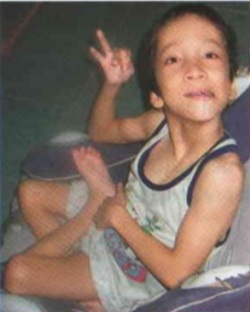
A 7‑year‑old girl is brought to the neurology clinic with abnormal body movements.
❓ Q1. Identify the movement disorder shown in the image. Describe its characteristic features.
✅ Model Answer: • Movement disorder: Dystonia – a hyperkinetic movement disorder characterized by sustained or intermittent muscle contractions causing twisting, repetitive movements, and abnormal postures.
• Key features: Sustained muscle contractions, twisting movements, abnormal postures, often painful; may be focal, segmental, or generalized; worsens with action; diurnal variation in some types (dopa-responsive dystonia).
• Key features: Sustained muscle contractions, twisting movements, abnormal postures, often painful; may be focal, segmental, or generalized; worsens with action; diurnal variation in some types (dopa-responsive dystonia).
❓ Q2. What is the definition of dystonia?
✅ Model Answer: • Definition: Dystonia is a movement disorder characterized by sustained or intermittent muscle contractions causing abnormal, often repetitive, movements, postures, or both.
• Dystonic movements are typically patterned, twisting, and may be tremulous.
• Often initiated or worsened by voluntary action (action dystonia) and associated with overflow muscle activation.
• Can be classified by age of onset, distribution (focal, segmental, generalized), and etiology (primary vs secondary).
• Dystonic movements are typically patterned, twisting, and may be tremulous.
• Often initiated or worsened by voluntary action (action dystonia) and associated with overflow muscle activation.
• Can be classified by age of onset, distribution (focal, segmental, generalized), and etiology (primary vs secondary).
❓ Q3. What are the clinical features of dopa-responsive dystonia (DYT5 / Segawa syndrome)?
✅ Model Answer: • Clinical features of DYT5 (Segawa syndrome):
- Age of onset: Usually childhood (4-8 years).
- Initial presentation: Dystonia starting in a lower limb (gait abnormality, foot inversion, toe walking).
- Diurnal variation: Symptoms worsen in the evening (end-of-day deterioration) and improve after sleep or rest.
- Progression: Slowly progressive to involve other limbs and trunk (generalized dystonia).
- Cognition: Normal intelligence.
- Response to levodopa: Dramatic and sustained improvement with low-dose levodopa.
- MRI brain: Usually normal.
- Age of onset: Usually childhood (4-8 years).
- Initial presentation: Dystonia starting in a lower limb (gait abnormality, foot inversion, toe walking).
- Diurnal variation: Symptoms worsen in the evening (end-of-day deterioration) and improve after sleep or rest.
- Progression: Slowly progressive to involve other limbs and trunk (generalized dystonia).
- Cognition: Normal intelligence.
- Response to levodopa: Dramatic and sustained improvement with low-dose levodopa.
- MRI brain: Usually normal.
❓ Q4. What is the genetic basis of dopa-responsive dystonia?
✅ Model Answer: • Genetics of DYT5: Autosomal dominant inheritance with variable penetrance (incomplete penetrance).
• Gene: GCH1 (GTP cyclohydrolase 1) located on chromosome 14q22.1-q22.2.
• Pathophysiology: GCH1 mutation → deficiency of GTP cyclohydrolase 1 → reduced synthesis of tetrahydrobiopterin (BH4) → BH4 is a cofactor for tyrosine hydroxylase → reduced dopamine synthesis in the striatum.
• Other genes: TH (tyrosine hydroxylase) deficiency, SPR (sepiapterin reductase) deficiency can also cause dopa-responsive dystonia.
• Gene: GCH1 (GTP cyclohydrolase 1) located on chromosome 14q22.1-q22.2.
• Pathophysiology: GCH1 mutation → deficiency of GTP cyclohydrolase 1 → reduced synthesis of tetrahydrobiopterin (BH4) → BH4 is a cofactor for tyrosine hydroxylase → reduced dopamine synthesis in the striatum.
• Other genes: TH (tyrosine hydroxylase) deficiency, SPR (sepiapterin reductase) deficiency can also cause dopa-responsive dystonia.
❓ Q5. What is the role of diurnal variation in diagnosing dystonia?
✅ Model Answer: • Diurnal variation: The fluctuation of symptoms throughout the day – worsening in the evening and improving after sleep or rest.
• Clinical significance: Diurnal variation is a hallmark of dopa-responsive dystonia (DYT5) and is an important diagnostic clue.
• It is seen in conditions with dopamine deficiency, as dopamine levels may fluctuate with activity and circadian rhythm.
• The presence of diurnal variation in a child with progressive dystonia strongly suggests dopa-responsive dystonia and warrants a trial of levodopa.
• Clinical significance: Diurnal variation is a hallmark of dopa-responsive dystonia (DYT5) and is an important diagnostic clue.
• It is seen in conditions with dopamine deficiency, as dopamine levels may fluctuate with activity and circadian rhythm.
• The presence of diurnal variation in a child with progressive dystonia strongly suggests dopa-responsive dystonia and warrants a trial of levodopa.
❓ Q6. What is the diagnostic test for dopa-responsive dystonia?
✅ Model Answer: • Diagnostic test: A trial of carbidopa-levodopa (levodopa trial) – the gold standard diagnostic test and first-line treatment.
• Dose: Start at 1-2 mg/kg/day of levodopa (divided doses), titrated upward based on response (up to 5-10 mg/kg/day).
• Response: A dramatic and sustained improvement (often within days to weeks) confirms the diagnosis.
• Genetic testing: GCH1 mutation analysis can confirm the diagnosis but does not replace the levodopa trial.
• Note: A false-negative response is rare but possible; genetic testing may be helpful in such cases.
• Dose: Start at 1-2 mg/kg/day of levodopa (divided doses), titrated upward based on response (up to 5-10 mg/kg/day).
• Response: A dramatic and sustained improvement (often within days to weeks) confirms the diagnosis.
• Genetic testing: GCH1 mutation analysis can confirm the diagnosis but does not replace the levodopa trial.
• Note: A false-negative response is rare but possible; genetic testing may be helpful in such cases.
❓ Q7. What is the treatment for dopa-responsive dystonia?
✅ Model Answer: • First-line treatment: Carbidopa-levodopa (Sinemet).
- Dose: Low starting dose (1-2 mg/kg/day of levodopa) titrated to effect (typically 5-10 mg/kg/day in divided doses).
- Response: Sustained improvement; may require dose adjustments over time.
- Side effects: Nausea, dyskinesias (with higher doses), behavioral changes.
• Adjunctive therapies: Trihexyphenidyl (anticholinergic) – may be added for residual symptoms.
• Long-term management: Lifelong treatment; dose adjustments may be needed during growth spurts.
• Prognosis: Excellent if diagnosed early; most children achieve normal or near-normal function.
- Dose: Low starting dose (1-2 mg/kg/day of levodopa) titrated to effect (typically 5-10 mg/kg/day in divided doses).
- Response: Sustained improvement; may require dose adjustments over time.
- Side effects: Nausea, dyskinesias (with higher doses), behavioral changes.
• Adjunctive therapies: Trihexyphenidyl (anticholinergic) – may be added for residual symptoms.
• Long-term management: Lifelong treatment; dose adjustments may be needed during growth spurts.
• Prognosis: Excellent if diagnosed early; most children achieve normal or near-normal function.
❓ Q8. What is the role of trihexyphenidyl in the treatment of dystonia?
✅ Model Answer: • Trihexyphenidyl: An anticholinergic medication used as an adjunctive therapy for dystonia, particularly in children.
• Indications: Effective for generalized dystonia, including DYT1 (TOR1A) and other non-dopa-responsive dystonias.
• Mechanism: Blocks central muscarinic acetylcholine receptors → modulates striatal cholinergic activity and improves dystonia.
• Dose: Started at a low dose (0.5-1 mg/day) and titrated slowly (up to 2-5 mg/kg/day) over weeks to months.
• Side effects: Dry mouth, constipation, blurred vision, cognitive slowing, sedation, urinary retention.
• Used in: Generalized dystonia, especially when levodopa is ineffective or partially effective.
• Indications: Effective for generalized dystonia, including DYT1 (TOR1A) and other non-dopa-responsive dystonias.
• Mechanism: Blocks central muscarinic acetylcholine receptors → modulates striatal cholinergic activity and improves dystonia.
• Dose: Started at a low dose (0.5-1 mg/day) and titrated slowly (up to 2-5 mg/kg/day) over weeks to months.
• Side effects: Dry mouth, constipation, blurred vision, cognitive slowing, sedation, urinary retention.
• Used in: Generalized dystonia, especially when levodopa is ineffective or partially effective.
❓ Q9. What is the role of botulinum toxin in the treatment of dystonia?
✅ Model Answer: • Botulinum toxin: A neurotoxin that blocks acetylcholine release at the neuromuscular junction, causing temporary muscle paralysis.
• Indications: Focal or segmental dystonia – cervical dystonia, blepharospasm, writer's cramp, limb dystonia, and spasticity.
• Mechanism: Binds to presynaptic nerve terminals, cleaves SNARE proteins, and inhibits acetylcholine release → reduces muscle contractions.
• Dose: Injected into affected muscles under EMG guidance (or ultrasound).
• Duration: Effects last 3-6 months; repeat injections are needed.
• Side effects: Weakness in injected muscles, dysphagia (if injected into neck muscles), systemic effects (rare).
• Brands: Botox, Dysport, Xeomin.
• Indications: Focal or segmental dystonia – cervical dystonia, blepharospasm, writer's cramp, limb dystonia, and spasticity.
• Mechanism: Binds to presynaptic nerve terminals, cleaves SNARE proteins, and inhibits acetylcholine release → reduces muscle contractions.
• Dose: Injected into affected muscles under EMG guidance (or ultrasound).
• Duration: Effects last 3-6 months; repeat injections are needed.
• Side effects: Weakness in injected muscles, dysphagia (if injected into neck muscles), systemic effects (rare).
• Brands: Botox, Dysport, Xeomin.
❓ Q10. What is the role of deep brain stimulation (DBS) in the treatment of dystonia?
✅ Model Answer: • Deep brain stimulation (DBS): A neurosurgical procedure that involves implanting electrodes into specific brain targets to modulate abnormal neural activity.
• Indications: Refractory generalized dystonia (DYT1) and focal dystonia that does not respond to medical therapy.
• Targets: Globus pallidus internus (GPi) – most common target for dystonia; subthalamic nucleus (STN) in some cases.
• Mechanism: High-frequency stimulation modulates the basal ganglia-thalamocortical circuitry, reducing dystonic symptoms.
• Efficacy: Best response in DYT1 (TOR1A) dystonia; also effective in secondary dystonias (e.g., post-anoxic).
• Risks: Surgical complications (bleeding, infection), hardware-related issues, stimulation-related side effects.
• Age: Typically used in children >7 years with adequate brain development.
• Indications: Refractory generalized dystonia (DYT1) and focal dystonia that does not respond to medical therapy.
• Targets: Globus pallidus internus (GPi) – most common target for dystonia; subthalamic nucleus (STN) in some cases.
• Mechanism: High-frequency stimulation modulates the basal ganglia-thalamocortical circuitry, reducing dystonic symptoms.
• Efficacy: Best response in DYT1 (TOR1A) dystonia; also effective in secondary dystonias (e.g., post-anoxic).
• Risks: Surgical complications (bleeding, infection), hardware-related issues, stimulation-related side effects.
• Age: Typically used in children >7 years with adequate brain development.
❓ Q11. What are the differential diagnoses of childhood dystonia? )
✅ Model Answer: • Differential diagnoses:
- Dopa-responsive dystonia (DYT5): Diurnal variation, levodopa-responsive.
- DYT1 dystonia (TOR1A): Generalized dystonia, Ashkenazi Jewish ancestry, no diurnal variation, not levodopa-responsive.
- DYT6 dystonia (THAP1): Craniocervical and upper limb dystonia, adolescent onset.
- Wilson disease: Hepatic and neurologic symptoms, Kayser-Fleischer rings, low ceruloplasmin.
- PKAN (pantothenate kinase-associated neurodegeneration): Iron accumulation in globus pallidus, "eye-of-the-tiger" sign on MRI.
- Niemann-Pick type C: Vertical supranuclear gaze palsy, ataxia, dystonia.
- Huntington disease: Chorea, cognitive decline, autosomal dominant.
- Drug-induced dystonia: Neuroleptics (antipsychotics), antiemetics (metoclopramide).
- Cerebral palsy: Static encephalopathy, often with spasticity and dystonia.
- Dopa-responsive dystonia (DYT5): Diurnal variation, levodopa-responsive.
- DYT1 dystonia (TOR1A): Generalized dystonia, Ashkenazi Jewish ancestry, no diurnal variation, not levodopa-responsive.
- DYT6 dystonia (THAP1): Craniocervical and upper limb dystonia, adolescent onset.
- Wilson disease: Hepatic and neurologic symptoms, Kayser-Fleischer rings, low ceruloplasmin.
- PKAN (pantothenate kinase-associated neurodegeneration): Iron accumulation in globus pallidus, "eye-of-the-tiger" sign on MRI.
- Niemann-Pick type C: Vertical supranuclear gaze palsy, ataxia, dystonia.
- Huntington disease: Chorea, cognitive decline, autosomal dominant.
- Drug-induced dystonia: Neuroleptics (antipsychotics), antiemetics (metoclopramide).
- Cerebral palsy: Static encephalopathy, often with spasticity and dystonia.
❓ Q12. What is the "eye-of-the-tiger" sign and with which condition is it associated?
✅ Model Answer: • "Eye-of-the-tiger" sign: A radiographic finding on T2-weighted MRI brain, characterized by central hyperintensity (the "pupil") surrounded by hypointensity (the "iris") in the globus pallidus.
• Associated condition: Pantothenate kinase-associated neurodegeneration (PKAN) – also known as Hallervorden-Spatz syndrome.
• Pathophysiology: PKAN is caused by mutations in the PANK2 gene (autosomal recessive) → iron accumulation in the basal ganglia, particularly the globus pallidus.
• Clinical features: Progressive dystonia, rigidity, choreoathetosis, spasticity, cognitive decline, and pigmentary retinopathy.
• The "eye-of-the-tiger" sign is pathognomonic for PKAN.
• Associated condition: Pantothenate kinase-associated neurodegeneration (PKAN) – also known as Hallervorden-Spatz syndrome.
• Pathophysiology: PKAN is caused by mutations in the PANK2 gene (autosomal recessive) → iron accumulation in the basal ganglia, particularly the globus pallidus.
• Clinical features: Progressive dystonia, rigidity, choreoathetosis, spasticity, cognitive decline, and pigmentary retinopathy.
• The "eye-of-the-tiger" sign is pathognomonic for PKAN.
❓ Q13. How would you counsel the parents of a child with newly diagnosed dopa-responsive dystonia?
✅ Model Answer: • "Your child has been diagnosed with dopa-responsive dystonia, a genetic condition that affects movement. It is caused by a deficiency of dopamine, a chemical in the brain that controls movement."
• "The good news is that this condition is highly treatable with a medication called carbidopa-levodopa, which replaces the missing dopamine."
• "We will start this medication at a low dose and adjust it based on your child's response. Most children improve dramatically and can lead normal, active lives."
• "The medication may cause some side effects like nausea, but these can often be managed. Regular follow-up with a neurologist is important."
• "Since this is a genetic condition, we will offer genetic counseling for your family. Siblings may also need to be evaluated."
• "With proper treatment, your child's prognosis is excellent. We are here to support you every step of the way."
• "The good news is that this condition is highly treatable with a medication called carbidopa-levodopa, which replaces the missing dopamine."
• "We will start this medication at a low dose and adjust it based on your child's response. Most children improve dramatically and can lead normal, active lives."
• "The medication may cause some side effects like nausea, but these can often be managed. Regular follow-up with a neurologist is important."
• "Since this is a genetic condition, we will offer genetic counseling for your family. Siblings may also need to be evaluated."
• "With proper treatment, your child's prognosis is excellent. We are here to support you every step of the way."
❓ Q14. What is the difference between DYT1 and DYT5 dystonia?
✅ Model Answer: • DYT1 (TOR1A) dystonia:
- Gene: TOR1A (early-onset torsion dystonia).
- Onset: Childhood (often in a limb).
- Distribution: Usually generalized.
- Diurnal variation: No.
- Response to levodopa: No response.
- Treatment: Trihexyphenidyl, DBS (GPi).
- Ethnicity: Common in Ashkenazi Jews (GAG deletion).
• DYT5 (GCH1) dystonia (dopa-responsive):
- Gene: GCH1 (GTP cyclohydrolase 1).
- Onset: Childhood (4-8 years, lower limb).
- Distribution: Often starts in a lower limb, progresses to generalized.
- Diurnal variation: Yes (worse evening).
- Response to levodopa: Dramatic and sustained.
- Treatment: Carbidopa-levodopa.
- Genetics: Autosomal dominant with variable penetrance.
- Gene: TOR1A (early-onset torsion dystonia).
- Onset: Childhood (often in a limb).
- Distribution: Usually generalized.
- Diurnal variation: No.
- Response to levodopa: No response.
- Treatment: Trihexyphenidyl, DBS (GPi).
- Ethnicity: Common in Ashkenazi Jews (GAG deletion).
• DYT5 (GCH1) dystonia (dopa-responsive):
- Gene: GCH1 (GTP cyclohydrolase 1).
- Onset: Childhood (4-8 years, lower limb).
- Distribution: Often starts in a lower limb, progresses to generalized.
- Diurnal variation: Yes (worse evening).
- Response to levodopa: Dramatic and sustained.
- Treatment: Carbidopa-levodopa.
- Genetics: Autosomal dominant with variable penetrance.
❓ Q15. What is the prognosis for a child with dopa-responsive dystonia?
✅ Model Answer: • Prognosis: Excellent with appropriate treatment.
- Response to levodopa: Dramatic and sustained improvement – most children achieve normal or near-normal function.
- Motor function: With early diagnosis and treatment, children can walk, run, and participate in normal activities.
- Cognitive function: Normal intelligence.
- Long-term: Lifelong treatment is required, but dose adjustments may be needed during growth spurts or with disease progression.
- Quality of life: Significantly improved with treatment; most children lead full and active lives.
- Complications: Dyskinesias may develop with higher doses of levodopa; dose adjustment can minimize this.
- Overall: Dopa-responsive dystonia is one of the most treatable movement disorders in children.
- Response to levodopa: Dramatic and sustained improvement – most children achieve normal or near-normal function.
- Motor function: With early diagnosis and treatment, children can walk, run, and participate in normal activities.
- Cognitive function: Normal intelligence.
- Long-term: Lifelong treatment is required, but dose adjustments may be needed during growth spurts or with disease progression.
- Quality of life: Significantly improved with treatment; most children lead full and active lives.
- Complications: Dyskinesias may develop with higher doses of levodopa; dose adjustment can minimize this.
- Overall: Dopa-responsive dystonia is one of the most treatable movement disorders in children.
📋 Mock Test Feedback
💡 Examiner's note: Compare your answers with model answers. In real TOACS, you would discuss these with the examiner.