FCPS MCPS IMM MD Paediatrics TOACS
Observed Station | CPSP Format | 8 minutes
⏱️ TIME REMAINING
08:00
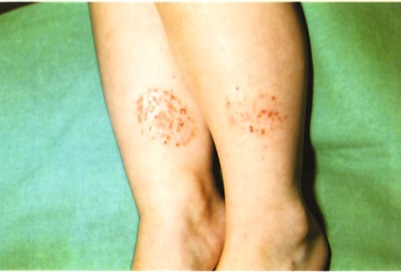
A 9‑year‑old child with coin-shaped, erythematous, crusted plaques on extensor surfaces.
❓ Q1. Identify the condition shown in the image. List the key clinical features.
✅ Model Answer: • Condition: Nummular (discoid) eczema.
• Key clinical features:
- Coin-shaped (nummular) plaques: well-demarcated, round/oval, 1-5 cm in diameter.
- Erythematous, crusted, scaly – often with vesicles or excoriations.
- Extensor surfaces: commonly on arms, legs, and trunk.
- Pruritus: often intense, leading to scratching and excoriation.
- Worse in winter: associated with dry skin (xerosis) and low humidity.
- Chronic, relapsing – may persist for months.
• Key clinical features:
- Coin-shaped (nummular) plaques: well-demarcated, round/oval, 1-5 cm in diameter.
- Erythematous, crusted, scaly – often with vesicles or excoriations.
- Extensor surfaces: commonly on arms, legs, and trunk.
- Pruritus: often intense, leading to scratching and excoriation.
- Worse in winter: associated with dry skin (xerosis) and low humidity.
- Chronic, relapsing – may persist for months.
❓ Q2. What are the differential diagnoses of nummular eczema?
✅ Model Answer: • Differential diagnoses:
- Tinea corporis: annular lesions with active scaly border, central clearing; KOH preparation positive for fungal hyphae.
- Plaque psoriasis: well-demarcated, silvery-white scales; nail pitting, onycholysis; often extensor surfaces (elbows, knees).
- Atopic dermatitis: flexural involvement (antecubital, popliteal), more generalized, associated with personal/family atopy.
- Contact dermatitis: history of exposure to allergens/irritants; may be vesicular, well-demarcated at contact site.
- Pityriasis rosea: herald patch followed by smaller lesions in a "Christmas tree" distribution on trunk.
- Secondary syphilis: copper-colored papules, palmoplantar lesions, mucous patches.
- Tinea corporis: annular lesions with active scaly border, central clearing; KOH preparation positive for fungal hyphae.
- Plaque psoriasis: well-demarcated, silvery-white scales; nail pitting, onycholysis; often extensor surfaces (elbows, knees).
- Atopic dermatitis: flexural involvement (antecubital, popliteal), more generalized, associated with personal/family atopy.
- Contact dermatitis: history of exposure to allergens/irritants; may be vesicular, well-demarcated at contact site.
- Pityriasis rosea: herald patch followed by smaller lesions in a "Christmas tree" distribution on trunk.
- Secondary syphilis: copper-colored papules, palmoplantar lesions, mucous patches.
❓ Q3. What is the pathophysiology of nummular eczema?
✅ Model Answer: • Pathophysiology:
- Not fully understood; considered a variant of atopic dermatitis or a distinct entity.
- Associated with xerosis (dry skin) – impaired skin barrier function leads to transepidermal water loss and inflammation.
- Environmental factors: winter (low humidity), harsh soaps, detergents, and irritants exacerbate the condition.
- Hypersensitivity reaction: may be triggered by bacterial colonization (Staphylococcus aureus) or contact allergens.
- Immune dysregulation: Th2-mediated inflammation with increased serum IgE in some patients.
- Genetics: filaggrin gene mutations (FLG) may predispose to dry skin and barrier dysfunction.
- Not fully understood; considered a variant of atopic dermatitis or a distinct entity.
- Associated with xerosis (dry skin) – impaired skin barrier function leads to transepidermal water loss and inflammation.
- Environmental factors: winter (low humidity), harsh soaps, detergents, and irritants exacerbate the condition.
- Hypersensitivity reaction: may be triggered by bacterial colonization (Staphylococcus aureus) or contact allergens.
- Immune dysregulation: Th2-mediated inflammation with increased serum IgE in some patients.
- Genetics: filaggrin gene mutations (FLG) may predispose to dry skin and barrier dysfunction.
❓ Q4. What is the first-line treatment for nummular eczema?
✅ Model Answer: • First-line treatment:
- Emollients (moisturizers): thick creams or ointments applied liberally and frequently (2-3 times daily) to restore skin barrier. Use fragrance-free, hypoallergenic products.
- Mid-potency topical corticosteroids: e.g., triamcinolone 0.1% or mometasone furoate 0.1%. Apply once or twice daily to active lesions for 1-2 weeks, then taper.
- Topical calcineurin inhibitors: tacrolimus 0.03% (children) or pimecrolimus 1% – used for steroid-sensitive areas or as steroid-sparing agents.
- Antihistamines: oral antihistamines (e.g., cetirizine, hydroxyzine) for pruritus, especially at night.
- Avoid irritants: mild soaps, avoid excessive bathing, use lukewarm water, pat dry, and apply emollient immediately after bathing.
- Emollients (moisturizers): thick creams or ointments applied liberally and frequently (2-3 times daily) to restore skin barrier. Use fragrance-free, hypoallergenic products.
- Mid-potency topical corticosteroids: e.g., triamcinolone 0.1% or mometasone furoate 0.1%. Apply once or twice daily to active lesions for 1-2 weeks, then taper.
- Topical calcineurin inhibitors: tacrolimus 0.03% (children) or pimecrolimus 1% – used for steroid-sensitive areas or as steroid-sparing agents.
- Antihistamines: oral antihistamines (e.g., cetirizine, hydroxyzine) for pruritus, especially at night.
- Avoid irritants: mild soaps, avoid excessive bathing, use lukewarm water, pat dry, and apply emollient immediately after bathing.
❓ Q5. What is the role of emollients in the management of nummular eczema?
✅ Model Answer: • Role of emollients:
- Restore skin barrier: emollients fill the gaps between corneocytes, preventing transepidermal water loss.
- Hydrate the skin: humectants (e.g., glycerin, urea) attract water to the stratum corneum; occlusives (e.g., petroleum jelly) trap moisture.
- Reduce inflammation: by improving barrier function, emollients reduce the entry of irritants and allergens.
- Reduce steroid requirement: regular emollient use can reduce the need for topical corticosteroids.
- Application: apply generously (adults ~500 g/week; children proportional) and frequently (2-3 times daily), especially after bathing (within 3 minutes).
- Choice: choose fragrance-free, hypoallergenic, and ceramide-containing formulations for best results.
- Restore skin barrier: emollients fill the gaps between corneocytes, preventing transepidermal water loss.
- Hydrate the skin: humectants (e.g., glycerin, urea) attract water to the stratum corneum; occlusives (e.g., petroleum jelly) trap moisture.
- Reduce inflammation: by improving barrier function, emollients reduce the entry of irritants and allergens.
- Reduce steroid requirement: regular emollient use can reduce the need for topical corticosteroids.
- Application: apply generously (adults ~500 g/week; children proportional) and frequently (2-3 times daily), especially after bathing (within 3 minutes).
- Choice: choose fragrance-free, hypoallergenic, and ceramide-containing formulations for best results.
❓ Q6. How would you differentiate nummular eczema from tinea corporis?
✅ Model Answer: • Differentiation from tinea corporis:
- Appearance: Nummular eczema – well-demarcated, coin-shaped, erythematous, crusted, scaly plaques with no central clearing. Tinea corporis – annular (ring-shaped) lesions with a central clearing and an active, scaly, raised border.
- Location: Nummular eczema – extensor surfaces (arms, legs). Tinea corporis – any area, often trunk and exposed skin.
- Pruritus: Nummular eczema – often intense. Tinea – variable, can be pruritic.
- Diagnostic test: Tinea corporis – KOH preparation shows fungal hyphae; fungal culture can confirm. Nummular eczema – KOH negative.
- Response to treatment: Nummular eczema improves with emollients and topical steroids. Tinea corporis worsens with steroids (steroid-modified tinea); improves with topical antifungals (e.g., clotrimazole, terbinafine).
- Appearance: Nummular eczema – well-demarcated, coin-shaped, erythematous, crusted, scaly plaques with no central clearing. Tinea corporis – annular (ring-shaped) lesions with a central clearing and an active, scaly, raised border.
- Location: Nummular eczema – extensor surfaces (arms, legs). Tinea corporis – any area, often trunk and exposed skin.
- Pruritus: Nummular eczema – often intense. Tinea – variable, can be pruritic.
- Diagnostic test: Tinea corporis – KOH preparation shows fungal hyphae; fungal culture can confirm. Nummular eczema – KOH negative.
- Response to treatment: Nummular eczema improves with emollients and topical steroids. Tinea corporis worsens with steroids (steroid-modified tinea); improves with topical antifungals (e.g., clotrimazole, terbinafine).
❓ Q7. What are the complications of nummular eczema?
✅ Model Answer: • Complications:
- Secondary bacterial infection (impetiginization): Staphylococcus aureus or Streptococcus pyogenes → crusted, weeping lesions; may require topical or oral antibiotics.
- Atrophic scarring: from chronic scratching and inflammation.
- Post-inflammatory hyperpigmentation or hypopigmentation: especially in darker skin types.
- Lichenification: thickening of the skin from chronic rubbing and scratching.
- Psychosocial impact: chronic pruritus and visible lesions may affect school, sleep, and self-esteem.
- Steroid side effects: with prolonged use – skin atrophy, telangiectasias, striae, and systemic absorption (especially with potent steroids).
- Secondary bacterial infection (impetiginization): Staphylococcus aureus or Streptococcus pyogenes → crusted, weeping lesions; may require topical or oral antibiotics.
- Atrophic scarring: from chronic scratching and inflammation.
- Post-inflammatory hyperpigmentation or hypopigmentation: especially in darker skin types.
- Lichenification: thickening of the skin from chronic rubbing and scratching.
- Psychosocial impact: chronic pruritus and visible lesions may affect school, sleep, and self-esteem.
- Steroid side effects: with prolonged use – skin atrophy, telangiectasias, striae, and systemic absorption (especially with potent steroids).
❓ Q8. What is the role of topical calcineurin inhibitors in nummular eczema?
✅ Model Answer: • Topical calcineurin inhibitors (TCIs):
- Examples: tacrolimus (0.03% for children 2-15 years) and pimecrolimus (1% cream).
- Indications: used for steroid-sensitive areas (face, eyelids, intertriginous areas) and as steroid-sparing agents for long-term management.
- Mechanism: inhibit calcineurin → reduce T-cell activation and inflammatory cytokine production (IL-2, IFN-γ).
- Advantages: no skin atrophy, no telangiectasias, no striae; safe for long-term use.
- Side effects: transient burning/stinging sensation, flushing; rare risk of malignancy (black box warning – but studies show minimal risk with topical use).
- Use: apply twice daily to affected areas until resolution; may be used on a maintenance schedule (twice weekly) to prevent flares.
- Examples: tacrolimus (0.03% for children 2-15 years) and pimecrolimus (1% cream).
- Indications: used for steroid-sensitive areas (face, eyelids, intertriginous areas) and as steroid-sparing agents for long-term management.
- Mechanism: inhibit calcineurin → reduce T-cell activation and inflammatory cytokine production (IL-2, IFN-γ).
- Advantages: no skin atrophy, no telangiectasias, no striae; safe for long-term use.
- Side effects: transient burning/stinging sensation, flushing; rare risk of malignancy (black box warning – but studies show minimal risk with topical use).
- Use: apply twice daily to affected areas until resolution; may be used on a maintenance schedule (twice weekly) to prevent flares.
❓ Q9. What advice would you give to parents about preventing flares of nummular eczema?
✅ Model Answer: • Preventive advice (education):
- Moisturize regularly: apply emollients 2-3 times daily, especially after bathing. Use fragrance-free, hypoallergenic products.
- Bathing: use lukewarm water (not hot), limit bath time to 10-15 minutes, use mild soap-free cleansers, and pat dry (do not rub).
- Avoid irritants: use gentle, fragrance-free detergents; avoid harsh soaps, fabric softeners, and wool clothing.
- Humidity: use a humidifier in the home during winter (humidify to 40-50%).
- Treat flares early: at first sign of redness or itching, apply prescribed topical steroids and increase emollient use.
- Maintain cool environment: avoid overheating, which can trigger itching.
- Nail care: keep nails short to reduce excoriation and secondary infection.
- Follow-up: regular follow-up with pediatrician/dermatologist to monitor response and adjust treatment.
- Moisturize regularly: apply emollients 2-3 times daily, especially after bathing. Use fragrance-free, hypoallergenic products.
- Bathing: use lukewarm water (not hot), limit bath time to 10-15 minutes, use mild soap-free cleansers, and pat dry (do not rub).
- Avoid irritants: use gentle, fragrance-free detergents; avoid harsh soaps, fabric softeners, and wool clothing.
- Humidity: use a humidifier in the home during winter (humidify to 40-50%).
- Treat flares early: at first sign of redness or itching, apply prescribed topical steroids and increase emollient use.
- Maintain cool environment: avoid overheating, which can trigger itching.
- Nail care: keep nails short to reduce excoriation and secondary infection.
- Follow-up: regular follow-up with pediatrician/dermatologist to monitor response and adjust treatment.
❓ Q10. What is the prognosis of nummular eczema?
✅ Model Answer: • Prognosis:
- Chronic relapsing course: nummular eczema often recurs, especially in winter (low humidity, dry skin).
- Response to treatment: most patients respond well to emollients and topical steroids; flares can be managed with appropriate therapy.
- Long-term: many children outgrow the condition or have milder symptoms in adulthood.
- Quality of life: can be significantly affected by pruritus and appearance; early treatment and education improve outcomes.
- Risk factors for persistence: severe xerosis, atopic diathesis, and poor adherence to skin care regimen.
- Regular follow-up: important to monitor for complications and adjust treatment as needed.
- Chronic relapsing course: nummular eczema often recurs, especially in winter (low humidity, dry skin).
- Response to treatment: most patients respond well to emollients and topical steroids; flares can be managed with appropriate therapy.
- Long-term: many children outgrow the condition or have milder symptoms in adulthood.
- Quality of life: can be significantly affected by pruritus and appearance; early treatment and education improve outcomes.
- Risk factors for persistence: severe xerosis, atopic diathesis, and poor adherence to skin care regimen.
- Regular follow-up: important to monitor for complications and adjust treatment as needed.
📋 Mock Test Feedback
💡 Examiner's note: Compare your answers with model answers. In real TOACS, you would discuss these with the examiner.