· FCPS MCPS IMM MD Paediatrics TOACS
Observed Station | CPSP Format | 8 minutes
⏱️ TIME REMAINING
08:00
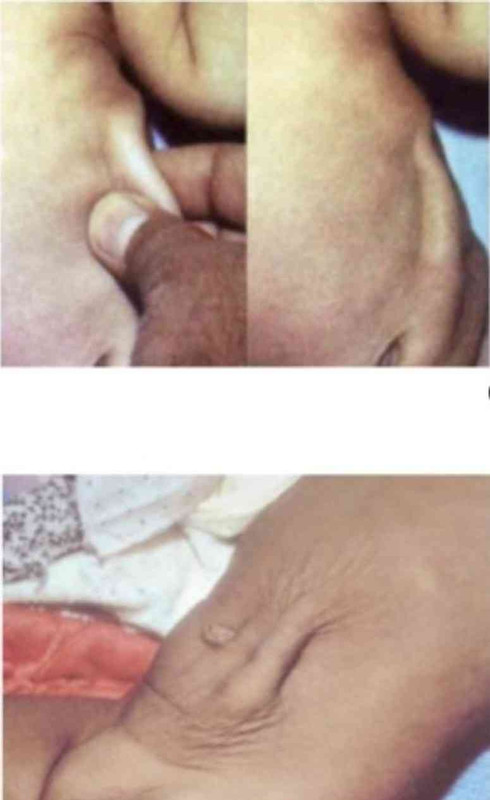
A 15‑month‑old child is brought to the emergency department with a 2‑day history of watery diarrhea and vomiting.
❓ Q1. Identify the condition shown in the image. What is the most likely underlying cause? (2 marks)
✅ Model Answer: • Condition: Dehydration (severe) in a child.
• Most likely cause: Acute gastroenteritis (viral or bacterial) leading to fluid loss through diarrhea and vomiting.
• Key features: Sunken eyes, dry mucous membranes, poor skin turgor, lethargy, absent tears, delayed capillary refill.
• Most likely cause: Acute gastroenteritis (viral or bacterial) leading to fluid loss through diarrhea and vomiting.
• Key features: Sunken eyes, dry mucous membranes, poor skin turgor, lethargy, absent tears, delayed capillary refill.
❓ Q2. What are the common causes of acute gastroenteritis in children? (2 marks)
✅ Model Answer: • Viral (most common): Rotavirus (especially in infants), Norovirus, Adenovirus, Astrovirus, Sapovirus.
• Bacterial: Salmonella, Shigella, Campylobacter, E. coli (including STEC), Yersinia, Vibrio cholerae (cholera).
• Parasitic: Giardia lamblia, Cryptosporidium, Entamoeba histolytica.
• Transmission: Fecal-oral route, contaminated food/water, person-to-person.
• Bacterial: Salmonella, Shigella, Campylobacter, E. coli (including STEC), Yersinia, Vibrio cholerae (cholera).
• Parasitic: Giardia lamblia, Cryptosporidium, Entamoeba histolytica.
• Transmission: Fecal-oral route, contaminated food/water, person-to-person.
❓ Q3. How do you assess the severity of dehydration using WHO/IMCI criteria? (2 marks)
✅ Model Answer: • WHO/IMCI dehydration classification:
- No dehydration (<3%): Child is alert, eyes normal, tears present, moist mucous membranes, drinks normally.
- Some dehydration (5-9%): Two or more of: irritable/restless, sunken eyes, decreased tears, dry mucous membranes, thirsty/drinks eagerly, decreased urine output.
- Severe dehydration (≥10%): Lethargic/unconscious, very sunken eyes, absent tears, very dry mucous membranes, unable to drink or drinks poorly, skin pinch very slow (>2 sec), capillary refill >3 sec, shock (cold extremities).
- No dehydration (<3%): Child is alert, eyes normal, tears present, moist mucous membranes, drinks normally.
- Some dehydration (5-9%): Two or more of: irritable/restless, sunken eyes, decreased tears, dry mucous membranes, thirsty/drinks eagerly, decreased urine output.
- Severe dehydration (≥10%): Lethargic/unconscious, very sunken eyes, absent tears, very dry mucous membranes, unable to drink or drinks poorly, skin pinch very slow (>2 sec), capillary refill >3 sec, shock (cold extremities).
❓ Q4. What are the clinical signs of dehydration in a child? (2 marks)
✅ Model Answer: • Signs of dehydration:
- General: Lethargy, irritability, poor appetite.
- Eyes: Sunken eyes (periorbital hollowing).
- Mucous membranes: Dry, sticky mouth; absence of tears.
- Skin turgor: Skin pinch returns slowly (>2 seconds).
- Capillary refill: Prolonged (>2-3 seconds).
- Urine output: Decreased (<1 mL/kg/hr), oliguria or anuria.
- Vital signs: Tachycardia, hypotension (late sign), weak pulses.
- Weight loss: >5% (some dehydration) or >10% (severe dehydration).
- General: Lethargy, irritability, poor appetite.
- Eyes: Sunken eyes (periorbital hollowing).
- Mucous membranes: Dry, sticky mouth; absence of tears.
- Skin turgor: Skin pinch returns slowly (>2 seconds).
- Capillary refill: Prolonged (>2-3 seconds).
- Urine output: Decreased (<1 mL/kg/hr), oliguria or anuria.
- Vital signs: Tachycardia, hypotension (late sign), weak pulses.
- Weight loss: >5% (some dehydration) or >10% (severe dehydration).
❓ Q5. What is the Gorelick dehydration score? (2 marks)
✅ Model Answer: • Gorelick score (4-point dehydration score):
- 1 point each for: poor general appearance, absent tears, dry mucous membranes, delayed capillary refill (>2 sec).
- Score interpretation:
- 0-1: Minimal dehydration (<3%)
- 2-3: Some dehydration (5-9%)
- 4: Severe dehydration (≥10%)
• This score is validated for children with gastroenteritis and helps guide management.
- 1 point each for: poor general appearance, absent tears, dry mucous membranes, delayed capillary refill (>2 sec).
- Score interpretation:
- 0-1: Minimal dehydration (<3%)
- 2-3: Some dehydration (5-9%)
- 4: Severe dehydration (≥10%)
• This score is validated for children with gastroenteritis and helps guide management.
❓ Q6. What is the management of some dehydration (5-9%) according to WHO guidelines? (2 marks)
✅ Model Answer: • WHO Plan B (some dehydration):
- ORS (low-osmolarity): 75 mL/kg given over 3-4 hours.
- Administration: Give small frequent sips (5-10 mL every 5-10 minutes) using a spoon, cup, or dropper.
- Reassessment: After 3-4 hours, reassess dehydration status. If improved, continue ORS at home. If not, repeat ORS or switch to IV fluids.
- If vomiting: Ondansetron can be used to facilitate ORS administration.
- ORS (low-osmolarity): 75 mL/kg given over 3-4 hours.
- Administration: Give small frequent sips (5-10 mL every 5-10 minutes) using a spoon, cup, or dropper.
- Reassessment: After 3-4 hours, reassess dehydration status. If improved, continue ORS at home. If not, repeat ORS or switch to IV fluids.
- If vomiting: Ondansetron can be used to facilitate ORS administration.
❓ Q7. What is the management of severe dehydration (≥10%)? (2 marks)
✅ Model Answer: • WHO Plan C (severe dehydration):
- IV fluids: Ringer lactate or normal saline.
- Bolus (rapid): 20 mL/kg over 30-60 minutes. Repeat until perfusion restored (may need 2-3 boluses).
- Maintenance: After bolus, give 70 mL/kg (or 100 mL/kg if still dehydrated) over 2.5-5 hours (infusion rate: 20-30 mL/kg/hour).
- ORS: Give ORS (5-10 mL/kg/hour) once the child can drink, in addition to IV fluids.
- Monitor: Vital signs, urine output, capillary refill, mental status. Reassess every 1-2 hours.
- IV fluids: Ringer lactate or normal saline.
- Bolus (rapid): 20 mL/kg over 30-60 minutes. Repeat until perfusion restored (may need 2-3 boluses).
- Maintenance: After bolus, give 70 mL/kg (or 100 mL/kg if still dehydrated) over 2.5-5 hours (infusion rate: 20-30 mL/kg/hour).
- ORS: Give ORS (5-10 mL/kg/hour) once the child can drink, in addition to IV fluids.
- Monitor: Vital signs, urine output, capillary refill, mental status. Reassess every 1-2 hours.
❓ Q8. What is the composition of WHO low-osmolarity ORS? (2 marks)
✅ Model Answer: • WHO low-osmolarity ORS (per liter):
- Sodium: 75 mEq/L (mmol/L)
- Potassium: 20 mEq/L
- Chloride: 65 mEq/L
- Citrate: 10 mmol/L
- Glucose: 75 mmol/L
- Osmolarity: 245 mOsm/L (reduced from 311 mOsm/L)
• Benefits: Low-osmolarity ORS reduces stool output, vomiting, and need for IV fluids. More effective and safer than standard ORS.
- Sodium: 75 mEq/L (mmol/L)
- Potassium: 20 mEq/L
- Chloride: 65 mEq/L
- Citrate: 10 mmol/L
- Glucose: 75 mmol/L
- Osmolarity: 245 mOsm/L (reduced from 311 mOsm/L)
• Benefits: Low-osmolarity ORS reduces stool output, vomiting, and need for IV fluids. More effective and safer than standard ORS.
❓ Q9. What is the role of ondansetron in acute gastroenteritis? (2 marks)
✅ Model Answer: • Ondansetron: A selective 5-HT3 receptor antagonist used as an antiemetic.
• Indications: Persistent vomiting in children with acute gastroenteritis.
• Benefits: Reduces vomiting, allows for successful ORS administration, and decreases the need for IV fluids and hospitalization.
• Dose: Oral dissolving tablet (ODT): 2 mg for children 8-15 kg, 4 mg for >15 kg; single dose (may repeat if needed). IV ondansetron: 0.15 mg/kg (max 4 mg).
• Side effects: Headache, constipation, QT prolongation (rare; use with caution if risk factors).
• Indications: Persistent vomiting in children with acute gastroenteritis.
• Benefits: Reduces vomiting, allows for successful ORS administration, and decreases the need for IV fluids and hospitalization.
• Dose: Oral dissolving tablet (ODT): 2 mg for children 8-15 kg, 4 mg for >15 kg; single dose (may repeat if needed). IV ondansetron: 0.15 mg/kg (max 4 mg).
• Side effects: Headache, constipation, QT prolongation (rare; use with caution if risk factors).
❓ Q10. What is the role of zinc supplementation in acute gastroenteritis? (2 marks)
✅ Model Answer: • Zinc supplementation: Recommended by WHO for children with acute diarrhea in developing countries.
• Benefits: Reduces the duration and severity of diarrhea, and prevents recurrence in the next 2-3 months.
• Dose: 20 mg/day (10 mg/day for infants <6 months) for 10-14 days.
• Mechanism: Supports intestinal mucosal repair, enhances immune response, and reduces fluid loss.
• Note: Zinc deficiency is common in developing countries; supplementation is not recommended in well-nourished populations.
• Benefits: Reduces the duration and severity of diarrhea, and prevents recurrence in the next 2-3 months.
• Dose: 20 mg/day (10 mg/day for infants <6 months) for 10-14 days.
• Mechanism: Supports intestinal mucosal repair, enhances immune response, and reduces fluid loss.
• Note: Zinc deficiency is common in developing countries; supplementation is not recommended in well-nourished populations.
❓ Q11. When are antibiotics indicated in acute gastroenteritis? (2 marks)
✅ Model Answer: • Antibiotics are NOT routinely indicated for acute gastroenteritis (most cases are viral and self-limiting).
• Indications:
- Dysentery (bloody diarrhea) – Shigella, Campylobacter.
- Cholera (rice-water stools) – Vibrio cholerae.
- Severe bacterial infection (sepsis, febrile immunocompromised).
- Immunocompromised patients.
- Specific bacterial pathogens: Salmonella (in infants, immunosuppressed), Shigella, Campylobacter, E. coli O157:H7 (avoid antibiotics if STEC – risk of HUS).
- Protozoal infections: Giardia (metronidazole), Entamoeba (metronidazole), Cryptosporidium (if immunocompromised).
• Indications:
- Dysentery (bloody diarrhea) – Shigella, Campylobacter.
- Cholera (rice-water stools) – Vibrio cholerae.
- Severe bacterial infection (sepsis, febrile immunocompromised).
- Immunocompromised patients.
- Specific bacterial pathogens: Salmonella (in infants, immunosuppressed), Shigella, Campylobacter, E. coli O157:H7 (avoid antibiotics if STEC – risk of HUS).
- Protozoal infections: Giardia (metronidazole), Entamoeba (metronidazole), Cryptosporidium (if immunocompromised).
❓ Q12. What is the role of probiotics in acute gastroenteritis? (2 marks)
✅ Model Answer: • Probiotics: Live microorganisms that confer a health benefit to the host.
• Evidence: Some studies suggest that probiotics (Lactobacillus rhamnosus GG, Saccharomyces boulardii) can reduce the duration of diarrhea by approximately 1 day.
• Mechanism: Restore gut flora, enhance mucosal barrier, and competitively inhibit pathogens.
• Recommendations: Can be used as adjunctive therapy, especially in children with acute watery diarrhea. Not universally recommended, and evidence is moderate.
• Safety: Generally safe in healthy children, but avoid in immunocompromised or critically ill patients.
• Evidence: Some studies suggest that probiotics (Lactobacillus rhamnosus GG, Saccharomyces boulardii) can reduce the duration of diarrhea by approximately 1 day.
• Mechanism: Restore gut flora, enhance mucosal barrier, and competitively inhibit pathogens.
• Recommendations: Can be used as adjunctive therapy, especially in children with acute watery diarrhea. Not universally recommended, and evidence is moderate.
• Safety: Generally safe in healthy children, but avoid in immunocompromised or critically ill patients.
❓ Q13. How would you counsel the parents of a child with dehydration from acute gastroenteritis? (2 marks)
✅ Model Answer: • "Your child has significant dehydration from the diarrhea and vomiting. We need to replace the lost fluids."
• "We will give IV fluids now to restore hydration quickly. Once your child can drink, we will switch to ORS (oral rehydration solution)."
• "Continue to breastfeed or give formula if your child can tolerate it."
• "Offer ORS frequently in small amounts (a few sips every 5-10 minutes)."
• "Avoid sugary drinks (juice, soda) and sports drinks – they can worsen diarrhea."
• "Monitor for signs of improvement: urine output (wet diapers), alertness, ability to drink."
• "Bring your child back immediately if vomiting persists, fever develops, or if they become lethargic or have blood in the stool."
• "We will give IV fluids now to restore hydration quickly. Once your child can drink, we will switch to ORS (oral rehydration solution)."
• "Continue to breastfeed or give formula if your child can tolerate it."
• "Offer ORS frequently in small amounts (a few sips every 5-10 minutes)."
• "Avoid sugary drinks (juice, soda) and sports drinks – they can worsen diarrhea."
• "Monitor for signs of improvement: urine output (wet diapers), alertness, ability to drink."
• "Bring your child back immediately if vomiting persists, fever develops, or if they become lethargic or have blood in the stool."
❓ Q14. What is the role of stool testing in acute gastroenteritis? (2 marks)
✅ Model Answer: • Stool testing is not routinely indicated for mild to moderate gastroenteritis (clinical diagnosis is sufficient).
• Indications for stool testing:
- Dysentery (bloody diarrhea) – stool culture, Shiga toxin (for STEC).
- Severe disease (high fever, toxicity, dehydration).
- Prolonged diarrhea (>7-10 days).
- Outbreak investigations.
- Immunocompromised patients.
- Specific pathogens suspected: Cholera (dark-field microscopy, culture), Giardia (stool O&P, antigen test), Cryptosporidium (acid-fast stain, antigen).
• Indications for stool testing:
- Dysentery (bloody diarrhea) – stool culture, Shiga toxin (for STEC).
- Severe disease (high fever, toxicity, dehydration).
- Prolonged diarrhea (>7-10 days).
- Outbreak investigations.
- Immunocompromised patients.
- Specific pathogens suspected: Cholera (dark-field microscopy, culture), Giardia (stool O&P, antigen test), Cryptosporidium (acid-fast stain, antigen).
❓ Q15. What is the differential diagnosis of acute gastroenteritis? (2 marks)
✅ Model Answer: • Differential diagnoses:
- Acute gastroenteritis (most common).
- Appendicitis – pain > vomiting, peritoneal signs, focal tenderness.
- Intussusception – colicky pain, currant jelly stool, sausage-shaped mass.
- Malabsorption – chronic diarrhea, weight loss, specific dietary triggers.
- Food allergy – vomiting, diarrhea, blood in stool, often with other allergic manifestations.
- Urinary tract infection – fever, vomiting, poor feeding, UTI in young children can mimic AGE.
- Metabolic disorders – rare, but consider if recurrent episodes or failure to thrive.
- Acute gastroenteritis (most common).
- Appendicitis – pain > vomiting, peritoneal signs, focal tenderness.
- Intussusception – colicky pain, currant jelly stool, sausage-shaped mass.
- Malabsorption – chronic diarrhea, weight loss, specific dietary triggers.
- Food allergy – vomiting, diarrhea, blood in stool, often with other allergic manifestations.
- Urinary tract infection – fever, vomiting, poor feeding, UTI in young children can mimic AGE.
- Metabolic disorders – rare, but consider if recurrent episodes or failure to thrive.
📋 Mock Test Feedback
💡 Examiner's note: Compare your answers with model answers. In real TOACS, you would discuss these with the examiner.