⚕️ FCPS Paediatrics TOACS · Mock Test
| Observed Station | CPSP Format
⏱️ TIME REMAINING
08:00
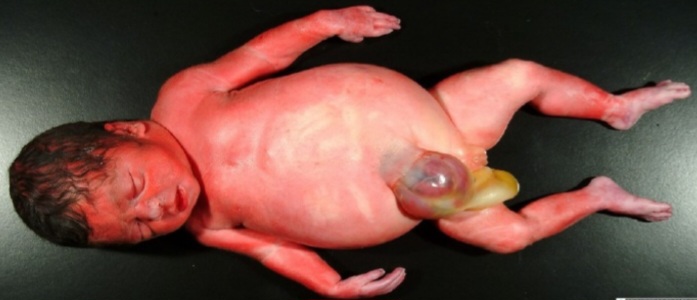
❓ Q1. What is the most likely diagnosis based on the image and clinical scenario? List the major clinical features of this syndrome.
✅ Model Answer:
• Diagnosis: Beckwith-Wiedemann Syndrome (BWS) – an overgrowth syndrome with predisposition to embryonal tumors.
• Major features: Macroglossia, omphalocele/abdominal wall defect, macrosomia (birth weight >90th percentile), neonatal hypoglycemia (hyperinsulinism), earlobe creases/posterior helical pits, visceromegaly (hepatomegaly, splenomegaly, nephromegaly), facial nevus flammeus, renal abnormalities, hemihyperplasia.
• Diagnosis: Beckwith-Wiedemann Syndrome (BWS) – an overgrowth syndrome with predisposition to embryonal tumors.
• Major features: Macroglossia, omphalocele/abdominal wall defect, macrosomia (birth weight >90th percentile), neonatal hypoglycemia (hyperinsulinism), earlobe creases/posterior helical pits, visceromegaly (hepatomegaly, splenomegaly, nephromegaly), facial nevus flammeus, renal abnormalities, hemihyperplasia.
❓ Q2. Describe the genetic basis of Beckwith-Wiedemann syndrome.
✅ Model Answer:
• Location: Chromosome 11p15.5 – an imprinted region.
• Key genes: IGF2 (paternal allele expressed, growth promoter) and CDKN1C (maternal allele expressed, growth inhibitor).
• Molecular mechanisms: IC2 LOM (50%), pUPD11 (20%), IC1 GOM (5-10%), CDKN1C mutation (5%), unknown (10%).
• Inheritance: Majority sporadic (>85%); familial cases autosomal dominant with imprinting.
• Location: Chromosome 11p15.5 – an imprinted region.
• Key genes: IGF2 (paternal allele expressed, growth promoter) and CDKN1C (maternal allele expressed, growth inhibitor).
• Molecular mechanisms: IC2 LOM (50%), pUPD11 (20%), IC1 GOM (5-10%), CDKN1C mutation (5%), unknown (10%).
• Inheritance: Majority sporadic (>85%); familial cases autosomal dominant with imprinting.
❓ Q3. The infant's blood glucose is 28 mg/dL. How do you manage the neonatal hypoglycemia in BWS?
✅ Model Answer:
• Immediate: IV 10% dextrose 2 mL/kg bolus if symptomatic, then continuous infusion 6-8 mg/kg/min. Target glucose >50 mg/dL.
• Persistent hyperinsulinism: Diazoxide (5-15 mg/kg/day) first-line; hydrochlorothiazide adjunct; octreotide/nifedipine second-line.
• Frequent glucose monitoring until stable.
• Immediate: IV 10% dextrose 2 mL/kg bolus if symptomatic, then continuous infusion 6-8 mg/kg/min. Target glucose >50 mg/dL.
• Persistent hyperinsulinism: Diazoxide (5-15 mg/kg/day) first-line; hydrochlorothiazide adjunct; octreotide/nifedipine second-line.
• Frequent glucose monitoring until stable.
❓ Q4. How do you manage the omphalocele in a newborn with BWS?
✅ Model Answer:
• Immediate: Cover sac with sterile, moist dressing; orogastric tube decompression; avoid rupture.
• Surgical repair: Primary closure for small defects; staged closure (silo) for large/liver-containing omphalocele.
• Pre-op: IV fluids, prophylactic antibiotics, monitor for sac rupture/infection.
• Immediate: Cover sac with sterile, moist dressing; orogastric tube decompression; avoid rupture.
• Surgical repair: Primary closure for small defects; staged closure (silo) for large/liver-containing omphalocele.
• Pre-op: IV fluids, prophylactic antibiotics, monitor for sac rupture/infection.
❓ Q5. What is the cancer risk in Beckwith-Wiedemann syndrome? Which tumors are most common?
✅ Model Answer:
• Cumulative cancer risk: 7-10% by age 8 years; highest in first 2 years.
• Most common tumors: Wilms tumor (nephroblastoma) 40-50%, hepatoblastoma 20-25%, neuroblastoma 5-10%, adrenocortical carcinoma 5%.
• Risk varies by molecular subtype: pUPD11 and IC1 GOM highest (20-30%).
• Cumulative cancer risk: 7-10% by age 8 years; highest in first 2 years.
• Most common tumors: Wilms tumor (nephroblastoma) 40-50%, hepatoblastoma 20-25%, neuroblastoma 5-10%, adrenocortical carcinoma 5%.
• Risk varies by molecular subtype: pUPD11 and IC1 GOM highest (20-30%).
❓ Q6. What is the recommended tumor surveillance protocol for a child with BWS?
✅ Model Answer:
• Abdominal ultrasound every 3 months until age 7-8 years (screen for Wilms tumor, hepatoblastoma, neuroblastoma).
• Serum alpha-fetoprotein (AFP) every 3 months until age 4 years (hepatoblastoma screening – use age-adjusted norms).
• Physical exam every 3-4 months, blood pressure monitoring.
• Abdominal ultrasound every 3 months until age 7-8 years (screen for Wilms tumor, hepatoblastoma, neuroblastoma).
• Serum alpha-fetoprotein (AFP) every 3 months until age 4 years (hepatoblastoma screening – use age-adjusted norms).
• Physical exam every 3-4 months, blood pressure monitoring.
❓ Q7. What other organ systems are commonly affected in BWS besides the abdominal wall?
✅ Model Answer:
• Renal: Nephromegaly, medullary dysplasia, cysts, Wilms tumor risk.
• Cardiovascular: Cardiomegaly, rare structural defects (ASD, VSD).
• Hepatosplenomegaly (hepatoblastoma risk).
• Endocrine: Hyperinsulinism (hypoglycemia), rarely hypothyroidism.
• Musculoskeletal: Hemihyperplasia, scoliosis, advanced bone age.
• Renal: Nephromegaly, medullary dysplasia, cysts, Wilms tumor risk.
• Cardiovascular: Cardiomegaly, rare structural defects (ASD, VSD).
• Hepatosplenomegaly (hepatoblastoma risk).
• Endocrine: Hyperinsulinism (hypoglycemia), rarely hypothyroidism.
• Musculoskeletal: Hemihyperplasia, scoliosis, advanced bone age.
❓ Q8. What is hemihyperplasia in BWS? How is it managed?
✅ Model Answer:
• Definition: Asymmetric overgrowth of one side of the body (limb, trunk, face). Present in ~25-30% of BWS.
• Management: Orthopedic surveillance for leg length discrepancy (LLD); LLD >2 cm may require shoe lift or epiphysiodesis.
• Monitor for intra-abdominal tumors on hyperplastic side.
• Definition: Asymmetric overgrowth of one side of the body (limb, trunk, face). Present in ~25-30% of BWS.
• Management: Orthopedic surveillance for leg length discrepancy (LLD); LLD >2 cm may require shoe lift or epiphysiodesis.
• Monitor for intra-abdominal tumors on hyperplastic side.
❓ Q9. How do you manage macroglossia in BWS? When is surgical reduction indicated?
✅ Model Answer:
• Conservative: Feeding support, speech therapy, positioning. Usually improves as facial growth catches up.
• Surgical reduction (partial glossectomy) indications: Severe airway obstruction, feeding failure with FTT, persistent drooling/speech articulation problems, dental malocclusion.
• Timing: Usually after 12-18 months.
• Conservative: Feeding support, speech therapy, positioning. Usually improves as facial growth catches up.
• Surgical reduction (partial glossectomy) indications: Severe airway obstruction, feeding failure with FTT, persistent drooling/speech articulation problems, dental malocclusion.
• Timing: Usually after 12-18 months.
❓ Q10. What is the long-term growth pattern and cognitive outcome in BWS?
✅ Model Answer:
• Growth: Macrosomia at birth, accelerated early childhood growth; adult height usually normal.
• Cognitive outcome: Majority have normal intelligence (85-90%). Mild developmental delays possible if severe neonatal hypoglycemia. Learning disabilities (dyslexia, ADHD) more common but not universal.
• Growth: Macrosomia at birth, accelerated early childhood growth; adult height usually normal.
• Cognitive outcome: Majority have normal intelligence (85-90%). Mild developmental delays possible if severe neonatal hypoglycemia. Learning disabilities (dyslexia, ADHD) more common but not universal.
❓ Q11. What are the differential diagnoses for Beckwith-Wiedemann syndrome?
✅ Model Answer:
• Simpson-Golabi-Behmel syndrome (X-linked, coarse facies, polydactyly)
• Perlman syndrome (neonatal overgrowth, renal dysplasia)
• Isolated omphalocele
• Costello syndrome (coarse facies, skin laxity, cardiomyopathy)
• Weaver syndrome (overgrowth, advanced bone age)
• Sotos syndrome (cerebral gigantism, macrocephaly)
• Key distinguishing features: Neonatal hypoglycemia + omphalocele + macroglossia + ear creases = BWS.
• Simpson-Golabi-Behmel syndrome (X-linked, coarse facies, polydactyly)
• Perlman syndrome (neonatal overgrowth, renal dysplasia)
• Isolated omphalocele
• Costello syndrome (coarse facies, skin laxity, cardiomyopathy)
• Weaver syndrome (overgrowth, advanced bone age)
• Sotos syndrome (cerebral gigantism, macrocephaly)
• Key distinguishing features: Neonatal hypoglycemia + omphalocele + macroglossia + ear creases = BWS.
❓ Q12. How will you counsel the parents regarding recurrence risk for future pregnancies?
✅ Model Answer:
• Recurrence risk depends on molecular diagnosis: IC2 LOM, IC1 GOM, or pUPD11 → <1% (sporadic).
• CDKN1C mutation (5%) → autosomal dominant with maternal inheritance: if mother carries mutation, 50% recurrence risk.
• Recommend genetic counseling and molecular testing; prenatal options include ultrasound surveillance and amniocentesis.
• Recurrence risk depends on molecular diagnosis: IC2 LOM, IC1 GOM, or pUPD11 → <1% (sporadic).
• CDKN1C mutation (5%) → autosomal dominant with maternal inheritance: if mother carries mutation, 50% recurrence risk.
• Recommend genetic counseling and molecular testing; prenatal options include ultrasound surveillance and amniocentesis.
📋 Mock Test Feedback
💡 Examiner's note: Compare your answers with the model answers. In real TOACS, you would discuss these with the examiner.