🩸 TOACS FCPS Station · Dactylitis in Sickle Cell Disease
📷 Clinical Photograph – Dactylitis (Hand-Foot Syndrome)
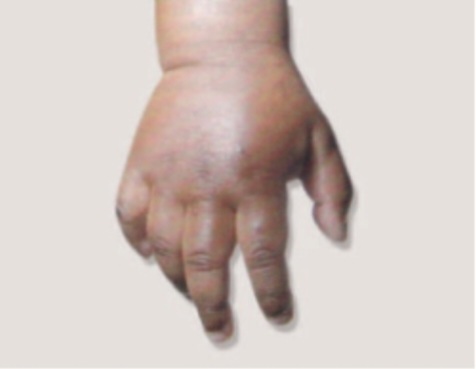
🔍 Key clinical features:
- ✓ Bilateral, symmetrical swelling – hands and feet
- ✓ Pain, tenderness – infant may refuse to bear weight or use hands
- ✓ Common in infants/toddlers – peak age 6–18 months
- ✓ Often the first clinical manifestation of sickle cell disease
- ✓ Due to vaso-occlusion in the small bones (metacarpals, metatarsals, phalanges)
📋 Clinical scenario (examiner prompt)
A 15‑month‑old infant is brought to the clinic with painful, swollen hands and feet that started 2 days ago. The mother reports that the child has been feverish and irritable, and refuses to bear weight on his feet or hold objects. On examination, both hands and feet are warm, tender, and mildly erythematous with pitting edema. The child is pale and febrile (38.8°C). The newborn screen showed HbFS, but the family has not yet established hematology follow-up.
🧑⚕️ Examiner tasks · TOACS
1. Identify the diagnosis from the clinical image and context.
2. Describe the clinical features (dactylitis – painful symmetric swelling of hands/feet, fever, irritability).
3. Explain the etiology and pathogenesis (vaso-occlusion in small bones of sickle cell disease).
4. Discuss diagnosis and management (supportive care, pain control, hydration, antibiotic evaluation for fever).
🎯 Expected answers (for examiners)
- • Diagnosis: Dactylitis (hand-foot syndrome) in sickle cell disease
- • Clinical features: Bilateral painful swelling of hands/feet, fever, irritability, refusal to bear weight; common in infants/toddlers
- • Pathophysiology: Vaso-occlusion in small bones (metacarpals, metatarsals, phalanges) due to HbS polymerization under hypoxic/acidotic conditions
- • Diagnosis: Clinical; confirmed by sickle cell genotype (HbSS, HbSβ⁰-thal). Consider CBC, reticulocyte count, blood culture if febrile
- • Management: Hydration (1.5x maintenance), analgesics (NSAIDs, opioids), close monitoring for fever/sepsis; may require hospitalization for pain control/fever workup
- • Prognosis: Episodes resolve in 1–2 weeks; may recur; can lead to chronic bone changes
• First manifestation of SCD in many children (6–18 months)
• Bilateral, symmetric – hands and feet
• Pain, swelling, fever – can mimic osteomyelitis
• Infection must be ruled out – fever workup (blood cultures, CXR)
• Supportive care – hydration, analgesia, monitoring
• Radiographic changes – may show periosteal reaction or bone lucencies
⚡ Quick FCPS‑style MCQ
A 14-month-old with sickle cell disease presents with bilateral painful swelling of the hands and feet, fever, and irritability. The most likely diagnosis is:
A. Osteomyelitis B. Dactylitis (hand-foot syndrome) C. Acute chest syndrome D. Splenic sequestration📌 Topic summary · Dactylitis in Sickle Cell Disease
Hand-foot syndrome – painful swelling of hands/feet
Infants/toddlers (6–18 months)
Vaso-occlusion in small bones
Bilateral swelling, pain, fever
Hydration, pain control, fever workup
Resolves in 1–2 weeks; may recur
| Feature | Dactylitis (Hand-Foot Syndrome) |
|---|---|
| Population | Infants and toddlers with SCD (HbSS, HbSβ⁰-thal) |
| Mechanism | Vaso-occlusion in metacarpals, metatarsals, phalanges |
| Presentation | Bilateral painful swelling, erythema, warmth, fever, irritability, refusal to bear weight |
| Differential | Osteomyelitis, septic arthritis, cellulitis |
| Management | Hydration, analgesia, fever workup (blood cultures, CXR), consider antibiotics if fever |
| Radiographic findings | Periosteal reaction, bone lucencies (later) |
| Prevention | Hydroxyurea may reduce frequency |