FCPS Paediatrics TOACS · Sick Sinus Syndrome
⚡ 14-year-old post-Fontan with palpitations, syncope – ECG: sinus bradycardia, pauses, alternating tachycardia – Causes: post-surgical (Fontan, Mustard), cardiomyopathy, SCN5A – Pacemaker, Rate control
📚 Paeds Online – paeds.online
⚕️ OBSERVED STATION · CPSP FORMAT · 8 MINUTES · SEPARATE TABS · CLINICAL SCENARIO
📖 Problem-oriented Clinical Scenario – Sick Sinus Syndrome
👶🏻 Clinical Scenario (read aloud – 2 min):
A 14-year-old girl with a history of hypoplastic left heart syndrome (HLHS) status post-Fontan procedure (completed at age 3) presents to the cardiology clinic with complaints of palpitations, lightheadedness, and two episodes of near-syncope over the past 3 months. She reports that her heart sometimes "feels very slow" and at other times "races." She has had difficulty with exercise tolerance and has been unable to keep up with her peers in physical education class. Her mother notes that she has been more fatigued than usual. She is currently on aspirin and enalapril. There is no family history of sudden death or arrhythmias.
Examination: Vital signs: HR 52 bpm (irregular), BP 105/65 mm Hg, RR 18/min, SpO2 96% on room air. Cardiovascular examination reveals an irregularly irregular rhythm with a variable heart rate. There is a soft systolic murmur. No hepatomegaly or edema. Neurological examination is normal.
ECG (obtained in clinic):
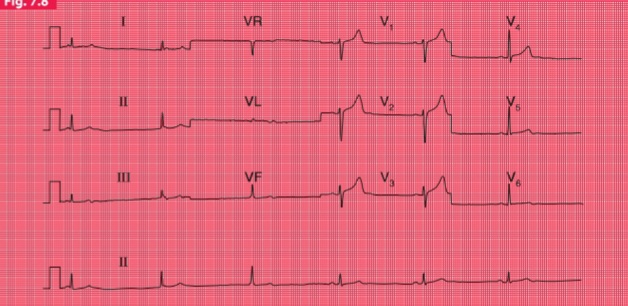 Task for the candidate: You are the pediatric cardiologist. Evaluate this patient, interpret the ECG, discuss the causes of sick sinus syndrome in children (post-surgical CHD, cardiomyopathy, channelopathies, drugs), formulate a management plan (rate control, anticoagulation, pacemaker), and provide counseling to the patient and family about prognosis and lifestyle modifications.
A 14-year-old girl with a history of hypoplastic left heart syndrome (HLHS) status post-Fontan procedure (completed at age 3) presents to the cardiology clinic with complaints of palpitations, lightheadedness, and two episodes of near-syncope over the past 3 months. She reports that her heart sometimes "feels very slow" and at other times "races." She has had difficulty with exercise tolerance and has been unable to keep up with her peers in physical education class. Her mother notes that she has been more fatigued than usual. She is currently on aspirin and enalapril. There is no family history of sudden death or arrhythmias.
Examination: Vital signs: HR 52 bpm (irregular), BP 105/65 mm Hg, RR 18/min, SpO2 96% on room air. Cardiovascular examination reveals an irregularly irregular rhythm with a variable heart rate. There is a soft systolic murmur. No hepatomegaly or edema. Neurological examination is normal.
ECG (obtained in clinic):
Figure: ECG shows sinus bradycardia (HR 45 bpm) with intermittent sinus pauses (3.2 seconds), followed by episodes of atrial tachycardia. Variable PR intervals and evidence of sinus node dysfunction.
💡 Examiner instruction (interactive): This is a case of Sick Sinus Syndrome (SSS) – a condition characterized by sinus node dysfunction leading to bradyarrhythmias and tachyarrhythmias (tachy-brady syndrome). The candidate must recognize the ECG pattern (sinus bradycardia, pauses, alternating tachycardia), understand the association with congenital heart disease (post-Fontan, Mustard, Senning, post-ASD repair), and differentiate SSS from other causes of bradycardia (drugs, hypothyroidism, heart block). Management includes rate control (beta-blockers), anticoagulation (if atrial arrhythmias), and pacemaker implantation for symptomatic bradycardia. The candidate should also discuss the role of genetic testing (SCN5A mutations) and the importance of transition to adult care.
🔍 Examiner Questions (interactive) – Click to reveal model answers
❓ Q1 (Examiner): “Describe the ECG findings in this patient. What is the diagnosis? What is the classic 'tachy-brady' syndrome pattern?”
✅ Candidate's answer:
• ECG findings:
- Sinus bradycardia – heart rate <60 bpm for age (45 bpm in this adolescent).
- Sinus pauses – >2-3 seconds, indicating sinus node dysfunction.
- Alternating tachycardia – episodes of atrial tachycardia or atrial flutter (tachy-brady syndrome).
- Variable PR intervals – may indicate AV node involvement.
- Junctional escape beats – may be present during sinus pauses.
• Diagnosis: Sick Sinus Syndrome (SSS) – also known as tachy-brady syndrome.
• Tachy-brady pattern: Alternating episodes of bradycardia (sinus bradycardia, pauses) and tachycardia (atrial arrhythmias such as atrial flutter, atrial fibrillation, or SVT). This is a hallmark of sick sinus syndrome.
• ECG findings:
- Sinus bradycardia – heart rate <60 bpm for age (45 bpm in this adolescent).
- Sinus pauses – >2-3 seconds, indicating sinus node dysfunction.
- Alternating tachycardia – episodes of atrial tachycardia or atrial flutter (tachy-brady syndrome).
- Variable PR intervals – may indicate AV node involvement.
- Junctional escape beats – may be present during sinus pauses.
• Diagnosis: Sick Sinus Syndrome (SSS) – also known as tachy-brady syndrome.
• Tachy-brady pattern: Alternating episodes of bradycardia (sinus bradycardia, pauses) and tachycardia (atrial arrhythmias such as atrial flutter, atrial fibrillation, or SVT). This is a hallmark of sick sinus syndrome.
❓ Q2 (Examiner): “What are the causes of sick sinus syndrome in children? Which congenital heart defects are most commonly associated?”
✅ Candidate's answer:
• Causes of Sick Sinus Syndrome in children:
1️⃣ Post-surgical congenital heart disease: Most common cause in children.
- Fontan procedure (any type – lateral tunnel, extracardiac conduit).
- Mustard or Senning procedure (atrial switch for d-TGA) – high incidence of sinus node dysfunction due to atrial suture lines.
- Repaired ASD – sinus node damage during surgery.
- Repaired VSD – less common.
2️⃣ Cardiomyopathy: Dilated cardiomyopathy, hypertrophic cardiomyopathy.
3️⃣ Channelopathies: SCN5A mutations (progressive cardiac conduction disease, Brugada syndrome, LQTS3).
4️⃣ Drugs: Beta-blockers, calcium channel blockers, digoxin, antiarrhythmics.
5️⃣ Infiltrative diseases: Myocarditis, sarcoidosis (rare).
6️⃣ Genetic: NKX2-5 mutations (ASD + AV block + SSS).
7️⃣ Idiopathic: Primary sinus node dysfunction (rare).
• Most common associated CHD: Fontan, Mustard, and Senning procedures – up to 50% of patients develop SSS over time.
• Causes of Sick Sinus Syndrome in children:
1️⃣ Post-surgical congenital heart disease: Most common cause in children.
- Fontan procedure (any type – lateral tunnel, extracardiac conduit).
- Mustard or Senning procedure (atrial switch for d-TGA) – high incidence of sinus node dysfunction due to atrial suture lines.
- Repaired ASD – sinus node damage during surgery.
- Repaired VSD – less common.
2️⃣ Cardiomyopathy: Dilated cardiomyopathy, hypertrophic cardiomyopathy.
3️⃣ Channelopathies: SCN5A mutations (progressive cardiac conduction disease, Brugada syndrome, LQTS3).
4️⃣ Drugs: Beta-blockers, calcium channel blockers, digoxin, antiarrhythmics.
5️⃣ Infiltrative diseases: Myocarditis, sarcoidosis (rare).
6️⃣ Genetic: NKX2-5 mutations (ASD + AV block + SSS).
7️⃣ Idiopathic: Primary sinus node dysfunction (rare).
• Most common associated CHD: Fontan, Mustard, and Senning procedures – up to 50% of patients develop SSS over time.
❓ Q3 (Examiner): “Why does sick sinus syndrome occur after the Fontan procedure? What is the incidence?”
✅ Candidate's answer:
• Why SSS occurs after Fontan:
- Surgical injury: The sinus node is located near the superior vena cava (SVC) – atrial cannulation and suture lines can damage the sinus node or its blood supply.
- Hemodynamic changes: Elevated central venous pressure, atrial stretch, and chronic volume/pressure overload can affect sinus node function.
- Atrial scarring: Fibrosis from prior surgeries creates a substrate for reentry and sinus node dysfunction.
- Time-dependent: SSS is a progressive complication; incidence increases with time post-Fontan.
• Incidence:
- At 10 years post-Fontan: ~20-30% of patients develop SSS or atrial arrhythmias.
- At 20 years: ~40-50% develop SSS or tachyarrhythmias.
- Fontan type: Lateral tunnel and extracardiac Fontan have similar rates of SSS.
• Impact: SSS increases the risk of thromboembolism, heart failure, and Fontan failure.
• Why SSS occurs after Fontan:
- Surgical injury: The sinus node is located near the superior vena cava (SVC) – atrial cannulation and suture lines can damage the sinus node or its blood supply.
- Hemodynamic changes: Elevated central venous pressure, atrial stretch, and chronic volume/pressure overload can affect sinus node function.
- Atrial scarring: Fibrosis from prior surgeries creates a substrate for reentry and sinus node dysfunction.
- Time-dependent: SSS is a progressive complication; incidence increases with time post-Fontan.
• Incidence:
- At 10 years post-Fontan: ~20-30% of patients develop SSS or atrial arrhythmias.
- At 20 years: ~40-50% develop SSS or tachyarrhythmias.
- Fontan type: Lateral tunnel and extracardiac Fontan have similar rates of SSS.
• Impact: SSS increases the risk of thromboembolism, heart failure, and Fontan failure.
❓ Q4 (Examiner): “What are the symptoms of sick sinus syndrome? How does it present in children?”
✅ Candidate's answer:
• Symptoms of SSS:
- Bradycardia-related symptoms:
- Syncope or near-syncope (due to prolonged pauses).
- Dizziness, lightheadedness.
- Fatigue, exercise intolerance (heart rate fails to increase with activity).
- Heart failure symptoms (if severe bradycardia leads to low cardiac output).
- Tachycardia-related symptoms:
- Palpitations (atrial flutter, SVT, atrial fibrillation).
- Chest discomfort.
- Variable symptoms: "Tachy-brady" pattern – episodes of palpitations alternating with dizziness/syncope.
• In children:
- Often presents with fatigue and exercise intolerance (decreased heart rate response).
- Syncope (especially during exertion or emotional stress).
- Palpitations – may be described as "racing heart."
- May be asymptomatic (incidental ECG finding) – but needs evaluation.
• Symptoms of SSS:
- Bradycardia-related symptoms:
- Syncope or near-syncope (due to prolonged pauses).
- Dizziness, lightheadedness.
- Fatigue, exercise intolerance (heart rate fails to increase with activity).
- Heart failure symptoms (if severe bradycardia leads to low cardiac output).
- Tachycardia-related symptoms:
- Palpitations (atrial flutter, SVT, atrial fibrillation).
- Chest discomfort.
- Variable symptoms: "Tachy-brady" pattern – episodes of palpitations alternating with dizziness/syncope.
• In children:
- Often presents with fatigue and exercise intolerance (decreased heart rate response).
- Syncope (especially during exertion or emotional stress).
- Palpitations – may be described as "racing heart."
- May be asymptomatic (incidental ECG finding) – but needs evaluation.
❓ Q5 (Examiner): “How is sick sinus syndrome diagnosed? What is the role of Holter monitoring and exercise stress testing?”
✅ Candidate's answer:
• Diagnosis of SSS:
1️⃣ ECG: Sinus bradycardia, sinus pauses (>2-3 seconds), sinus arrest, junctional escape rhythm.
2️⃣ Holter monitoring (24-48 hrs): Essential to capture episodic bradycardia, pauses, and tachyarrhythmias. Detects the "tachy-brady" pattern.
3️⃣ Exercise stress test: Assesses heart rate response to exercise – failure to increase heart rate (chronotropic incompetence) is a sign of SSS.
4️⃣ Ambulatory rhythm monitoring: For infrequent symptoms (event monitor, implantable loop recorder).
5️⃣ Echocardiogram: To exclude structural heart disease, assess ventricular function, and evaluate for Fontan complications.
• Role of Holter: Detects pauses >3 seconds, atrial arrhythmias, and the relationship between symptoms and rhythm.
• Role of exercise testing: Chronotropic incompetence (HR fails to reach 80% of predicted max) is a marker of sinus node dysfunction.
• Diagnosis of SSS:
1️⃣ ECG: Sinus bradycardia, sinus pauses (>2-3 seconds), sinus arrest, junctional escape rhythm.
2️⃣ Holter monitoring (24-48 hrs): Essential to capture episodic bradycardia, pauses, and tachyarrhythmias. Detects the "tachy-brady" pattern.
3️⃣ Exercise stress test: Assesses heart rate response to exercise – failure to increase heart rate (chronotropic incompetence) is a sign of SSS.
4️⃣ Ambulatory rhythm monitoring: For infrequent symptoms (event monitor, implantable loop recorder).
5️⃣ Echocardiogram: To exclude structural heart disease, assess ventricular function, and evaluate for Fontan complications.
• Role of Holter: Detects pauses >3 seconds, atrial arrhythmias, and the relationship between symptoms and rhythm.
• Role of exercise testing: Chronotropic incompetence (HR fails to reach 80% of predicted max) is a marker of sinus node dysfunction.
❓ Q6 (Examiner): “A patient with SSS and syncope presents to the ED. What is the acute management?”
✅ Candidate's answer:
• Acute management of symptomatic bradycardia/pauses:
1️⃣ Atropine: 0.02 mg/kg IV (max 0.5 mg) – may improve heart rate if vagal-mediated.
2️⃣ Isoproterenol: Infusion (0.05-1 mcg/kg/min) – increases heart rate temporarily.
3️⃣ Temporary transcutaneous or transvenous pacing: If symptomatic (syncope, hypotension, heart failure).
4️⃣ Treat underlying cause: Correct electrolyte abnormalities, adjust medications (beta-blockers, digoxin).
• If the patient has atrial tachycardia with rapid ventricular rate:
- Rate control: Beta-blockers (esmolol, metoprolol), digoxin (avoid in WPW).
- Anticoagulation: If atrial flutter or atrial fibrillation >48 hours, consider TEE-guided cardioversion or anticoagulation (warfarin, DOAC) for 3-4 weeks.
- Elective cardioversion: If unstable or refractory.
• Pacemaker: For persistent symptomatic bradycardia.
• Acute management of symptomatic bradycardia/pauses:
1️⃣ Atropine: 0.02 mg/kg IV (max 0.5 mg) – may improve heart rate if vagal-mediated.
2️⃣ Isoproterenol: Infusion (0.05-1 mcg/kg/min) – increases heart rate temporarily.
3️⃣ Temporary transcutaneous or transvenous pacing: If symptomatic (syncope, hypotension, heart failure).
4️⃣ Treat underlying cause: Correct electrolyte abnormalities, adjust medications (beta-blockers, digoxin).
• If the patient has atrial tachycardia with rapid ventricular rate:
- Rate control: Beta-blockers (esmolol, metoprolol), digoxin (avoid in WPW).
- Anticoagulation: If atrial flutter or atrial fibrillation >48 hours, consider TEE-guided cardioversion or anticoagulation (warfarin, DOAC) for 3-4 weeks.
- Elective cardioversion: If unstable or refractory.
• Pacemaker: For persistent symptomatic bradycardia.
❓ Q7 (Examiner): “What are the indications for permanent pacemaker implantation in sick sinus syndrome?”
✅ Candidate's answer:
• Indications for pacemaker in SSS (AHA/ACC guidelines):
1️⃣ Symptomatic bradycardia – syncope, near-syncope, dizziness, exercise intolerance directly attributable to bradycardia.
2️⃣ Sinus pauses >3 seconds with symptoms (or >5 seconds even asymptomatic).
3️⃣ Chronotropic incompetence – failure to increase heart rate with exercise causing symptoms.
4️⃣ Tachy-brady syndrome – if treatment of tachycardia (ablation, antiarrhythmics) is needed, pacing may be required to prevent bradycardia.
5️⃣ Post-surgical SSS (Fontan, Mustard) – if symptomatic and no reversible cause.
6️⃣ Asymptomatic patients with high-grade block – no pacemaker indicated unless symptoms.
• Pacemaker type: DDDR (dual-chamber rate-responsive) is preferred to maintain AV synchrony and improve exercise tolerance.
• In Fontan patients: Epicardial leads often needed; rate-responsive pacing important.
• Indications for pacemaker in SSS (AHA/ACC guidelines):
1️⃣ Symptomatic bradycardia – syncope, near-syncope, dizziness, exercise intolerance directly attributable to bradycardia.
2️⃣ Sinus pauses >3 seconds with symptoms (or >5 seconds even asymptomatic).
3️⃣ Chronotropic incompetence – failure to increase heart rate with exercise causing symptoms.
4️⃣ Tachy-brady syndrome – if treatment of tachycardia (ablation, antiarrhythmics) is needed, pacing may be required to prevent bradycardia.
5️⃣ Post-surgical SSS (Fontan, Mustard) – if symptomatic and no reversible cause.
6️⃣ Asymptomatic patients with high-grade block – no pacemaker indicated unless symptoms.
• Pacemaker type: DDDR (dual-chamber rate-responsive) is preferred to maintain AV synchrony and improve exercise tolerance.
• In Fontan patients: Epicardial leads often needed; rate-responsive pacing important.
❓ Q8 (Examiner): “This patient has episodes of atrial flutter. What is the role of anticoagulation? When is it indicated?”
✅ Candidate's answer:
• Atrial flutter/fibrillation in SSS (Fontan patients):
- High risk of thromboembolism – due to stagnant flow, atrial stasis, and intracardiac shunts (fenestrations).
- Anticoagulation indicated if:
- Atrial flutter/fibrillation >48 hours duration.
- Prior thromboembolism.
- Fenestrated Fontan – higher risk of paradoxical embolism.
- Mechanical valve or prior stroke.
• Anticoagulation options:
- Warfarin: Target INR 2-3 (for Fontan patients).
- DOACs (Direct oral anticoagulants): Apixaban, rivaroxaban – emerging use in adult congenital heart disease, but limited pediatric data.
- Heparin/LMWH: For acute anticoagulation or bridging.
- Aspirin: Not sufficient for atrial arrhythmias in Fontan patients.
• Cardioversion: If atrial flutter, may need TEE-guided cardioversion if duration >48 hours.
• Atrial flutter/fibrillation in SSS (Fontan patients):
- High risk of thromboembolism – due to stagnant flow, atrial stasis, and intracardiac shunts (fenestrations).
- Anticoagulation indicated if:
- Atrial flutter/fibrillation >48 hours duration.
- Prior thromboembolism.
- Fenestrated Fontan – higher risk of paradoxical embolism.
- Mechanical valve or prior stroke.
• Anticoagulation options:
- Warfarin: Target INR 2-3 (for Fontan patients).
- DOACs (Direct oral anticoagulants): Apixaban, rivaroxaban – emerging use in adult congenital heart disease, but limited pediatric data.
- Heparin/LMWH: For acute anticoagulation or bridging.
- Aspirin: Not sufficient for atrial arrhythmias in Fontan patients.
• Cardioversion: If atrial flutter, may need TEE-guided cardioversion if duration >48 hours.
❓ Q9 (Examiner): “How would you manage the tachycardia episodes in this patient? What medications are used?”
✅ Candidate's answer:
• Rate control for atrial tachyarrhythmias:
1️⃣ Beta-blockers: Metoprolol, atenolol, or propranolol – first-line for rate control and to reduce symptoms.
2️⃣ Digoxin: Can be used for rate control in atrial flutter, but avoid in WPW.
3️⃣ Calcium channel blockers: Verapamil or diltiazem – for rate control (avoid in WPW).
4️⃣ Class Ic antiarrhythmics: Flecainide – for rhythm control in atrial flutter (caution in structural heart disease).
5️⃣ Class III antiarrhythmics: Amiodarone or sotalol – for rhythm control (reserve for refractory cases).
• Rhythm control vs rate control:
- Rate control: Preferred if asymptomatic or well-tolerated.
- Rhythm control: If symptoms are severe, consider catheter ablation of atrial flutter.
• Ablation: For atrial flutter (cavotricuspid isthmus-dependent or intra-atrial reentry) – can reduce arrhythmia burden.
• Rate control for atrial tachyarrhythmias:
1️⃣ Beta-blockers: Metoprolol, atenolol, or propranolol – first-line for rate control and to reduce symptoms.
2️⃣ Digoxin: Can be used for rate control in atrial flutter, but avoid in WPW.
3️⃣ Calcium channel blockers: Verapamil or diltiazem – for rate control (avoid in WPW).
4️⃣ Class Ic antiarrhythmics: Flecainide – for rhythm control in atrial flutter (caution in structural heart disease).
5️⃣ Class III antiarrhythmics: Amiodarone or sotalol – for rhythm control (reserve for refractory cases).
• Rhythm control vs rate control:
- Rate control: Preferred if asymptomatic or well-tolerated.
- Rhythm control: If symptoms are severe, consider catheter ablation of atrial flutter.
• Ablation: For atrial flutter (cavotricuspid isthmus-dependent or intra-atrial reentry) – can reduce arrhythmia burden.
❓ Q10 (Examiner): “What is the role of catheter ablation in SSS? When would you consider it?”
✅ Candidate's answer:
• Catheter ablation is an adjunctive therapy for SSS – it does not cure SSS but can treat associated tachyarrhythmias.
• Indications for ablation in SSS:
1️⃣ Atrial flutter (cavotricuspid isthmus-dependent): Highly effective (>90% success).
2️⃣ Atrial fibrillation: Pulmonary vein isolation may reduce episodes (limited pediatric data).
3️⃣ SVT (WPW, AVNRT): If associated with palpitations.
4️⃣ Recurrent tachycardia despite medical therapy – especially if causing symptoms or Fontan failure.
• Important: Ablation may exacerbate bradycardia – often pacemaker is needed after ablation (since bradycardia may become more pronounced).
• In Fontan patients: Ablation of atrial flutter is often performed to reduce arrhythmia burden and improve Fontan hemodynamics.
• Catheter ablation is an adjunctive therapy for SSS – it does not cure SSS but can treat associated tachyarrhythmias.
• Indications for ablation in SSS:
1️⃣ Atrial flutter (cavotricuspid isthmus-dependent): Highly effective (>90% success).
2️⃣ Atrial fibrillation: Pulmonary vein isolation may reduce episodes (limited pediatric data).
3️⃣ SVT (WPW, AVNRT): If associated with palpitations.
4️⃣ Recurrent tachycardia despite medical therapy – especially if causing symptoms or Fontan failure.
• Important: Ablation may exacerbate bradycardia – often pacemaker is needed after ablation (since bradycardia may become more pronounced).
• In Fontan patients: Ablation of atrial flutter is often performed to reduce arrhythmia burden and improve Fontan hemodynamics.
❓ Q11 (Examiner): “What genetic mutations are associated with sick sinus syndrome?”
✅ Candidate's answer:
• Genetic mutations associated with SSS:
1️⃣ SCN5A: Causes progressive cardiac conduction disease (Lenègre disease), Brugada syndrome, LQTS3, and SSS.
2️⃣ HCN4: Mutations in the pacemaker channel – cause familial SSS.
3️⃣ NKX2-5: ASD + AV block + SSS.
4️⃣ MYH6: Atrial septal defects and sinus node dysfunction.
5️⃣ GATA4: Congenital heart disease and sinus node dysfunction.
6️⃣ TBX5 (Holt-Oram): ASD, upper limb anomalies, and conduction disease.
• Clinical implications: Genetic testing is indicated in patients with SSS and a family history of conduction disease, sudden death, or syndromic features. Cascade screening for family members.
• Genetic mutations associated with SSS:
1️⃣ SCN5A: Causes progressive cardiac conduction disease (Lenègre disease), Brugada syndrome, LQTS3, and SSS.
2️⃣ HCN4: Mutations in the pacemaker channel – cause familial SSS.
3️⃣ NKX2-5: ASD + AV block + SSS.
4️⃣ MYH6: Atrial septal defects and sinus node dysfunction.
5️⃣ GATA4: Congenital heart disease and sinus node dysfunction.
6️⃣ TBX5 (Holt-Oram): ASD, upper limb anomalies, and conduction disease.
• Clinical implications: Genetic testing is indicated in patients with SSS and a family history of conduction disease, sudden death, or syndromic features. Cascade screening for family members.
❓ Q12 (Examiner): “What are the complications of untreated sick sinus syndrome?”
✅ Candidate's answer:
• Complications of untreated SSS:
1️⃣ Syncope and falls – due to prolonged pauses → injury.
2️⃣ Heart failure – due to bradycardia (low cardiac output) and tachyarrhythmias.
3️⃣ Thromboembolism – atrial arrhythmias → clot formation → stroke or systemic embolism.
4️⃣ Fontan failure – in patients with single ventricle, arrhythmias can lead to protein-losing enteropathy, plastic bronchitis, and heart failure.
5️⃣ Sudden death – rare but can occur with severe bradycardia or if atrial fibrillation degenerates to VF (with WPW).
6️⃣ Progression of arrhythmias – SSS is a progressive disease; bradycardia and tachyarrhythmias worsen over time.
• Complications of untreated SSS:
1️⃣ Syncope and falls – due to prolonged pauses → injury.
2️⃣ Heart failure – due to bradycardia (low cardiac output) and tachyarrhythmias.
3️⃣ Thromboembolism – atrial arrhythmias → clot formation → stroke or systemic embolism.
4️⃣ Fontan failure – in patients with single ventricle, arrhythmias can lead to protein-losing enteropathy, plastic bronchitis, and heart failure.
5️⃣ Sudden death – rare but can occur with severe bradycardia or if atrial fibrillation degenerates to VF (with WPW).
6️⃣ Progression of arrhythmias – SSS is a progressive disease; bradycardia and tachyarrhythmias worsen over time.
❓ Q13 (Examiner): “Can this patient participate in sports? What are the recommendations?”
✅ Candidate's answer:
• Sports participation in SSS (AHA/ACC guidelines):
- Symptomatic SSS: No competitive sports until evaluated and treated.
- With pacemaker: Can participate in low-to-moderate intensity non-contact sports (swimming, jogging, tennis, golf).
- Avoid competitive sports if patient has:
- Uncontrolled atrial arrhythmias.
- Hemodynamically significant pauses (even with pacemaker).
- With Fontan: Avoid contact sports – risk of chest trauma and Fontan failure.
- Shared decision-making: Discuss risks and benefits. Most patients can lead active lives with proper management.
• Sports participation in SSS (AHA/ACC guidelines):
- Symptomatic SSS: No competitive sports until evaluated and treated.
- With pacemaker: Can participate in low-to-moderate intensity non-contact sports (swimming, jogging, tennis, golf).
- Avoid competitive sports if patient has:
- Uncontrolled atrial arrhythmias.
- Hemodynamically significant pauses (even with pacemaker).
- With Fontan: Avoid contact sports – risk of chest trauma and Fontan failure.
- Shared decision-making: Discuss risks and benefits. Most patients can lead active lives with proper management.
❓ Q14 (Examiner): “How will you counsel the patient and family about their diagnosis and management?”
✅ Candidate's structured answer:
• “You have a condition called Sick Sinus Syndrome – the natural pacemaker of the heart (the sinus node) is not working properly. Sometimes it beats too slowly, and sometimes it beats too fast – this is called 'tachy-brady' syndrome.”
• “This condition is commonly seen in patients who have had the Fontan procedure, and it is a known long-term complication. We have excellent treatments to manage it.”
• “For the slow heart rate, you may need a pacemaker – a small device that will help your heart beat at a normal rate. For the fast heart rate, we may use medications (beta-blockers) or consider a procedure called ablation to stop the fast rhythms.”
• “You will need to take blood thinners (anticoagulation) to prevent stroke, because the fast rhythms can lead to clot formation.”
• “You should avoid competitive sports but can still lead an active life with low-to-moderate intensity activities. We will follow you regularly in the cardiology clinic.”
• “We will help you transition to adult cardiology care when the time comes. You are not alone – we will support you every step of the way.”
• “You have a condition called Sick Sinus Syndrome – the natural pacemaker of the heart (the sinus node) is not working properly. Sometimes it beats too slowly, and sometimes it beats too fast – this is called 'tachy-brady' syndrome.”
• “This condition is commonly seen in patients who have had the Fontan procedure, and it is a known long-term complication. We have excellent treatments to manage it.”
• “For the slow heart rate, you may need a pacemaker – a small device that will help your heart beat at a normal rate. For the fast heart rate, we may use medications (beta-blockers) or consider a procedure called ablation to stop the fast rhythms.”
• “You will need to take blood thinners (anticoagulation) to prevent stroke, because the fast rhythms can lead to clot formation.”
• “You should avoid competitive sports but can still lead an active life with low-to-moderate intensity activities. We will follow you regularly in the cardiology clinic.”
• “We will help you transition to adult cardiology care when the time comes. You are not alone – we will support you every step of the way.”
🗣️ Examiner's probing / high-yield points (Sick Sinus Syndrome):
• "What is the classic ECG pattern of SSS?" → Tachy-brady: alternating sinus bradycardia and atrial arrhythmias.
• "What is the most common cause of SSS in children?" → Post-surgical congenital heart disease (Fontan, Mustard, Senning).
• "When is a pacemaker indicated in SSS?" → Symptomatic bradycardia, sinus pauses >3 seconds, chronotropic incompetence.
• "What is the role of anticoagulation in SSS?" → For atrial flutter/fibrillation – reduce thromboembolism risk.
• "What is the preferred pacemaker mode?" → DDDR (dual-chamber rate-responsive).
• "What genetic mutation is associated with SSS?" → SCN5A, HCN4, NKX2-5.
• "What is the first-line treatment for tachycardia in SSS?" → Beta-blockers (rate control).
• "What is the complication of untreated SSS?" → Syncope, heart failure, thromboembolism, Fontan failure.
• "What is the classic ECG pattern of SSS?" → Tachy-brady: alternating sinus bradycardia and atrial arrhythmias.
• "What is the most common cause of SSS in children?" → Post-surgical congenital heart disease (Fontan, Mustard, Senning).
• "When is a pacemaker indicated in SSS?" → Symptomatic bradycardia, sinus pauses >3 seconds, chronotropic incompetence.
• "What is the role of anticoagulation in SSS?" → For atrial flutter/fibrillation – reduce thromboembolism risk.
• "What is the preferred pacemaker mode?" → DDDR (dual-chamber rate-responsive).
• "What genetic mutation is associated with SSS?" → SCN5A, HCN4, NKX2-5.
• "What is the first-line treatment for tachycardia in SSS?" → Beta-blockers (rate control).
• "What is the complication of untreated SSS?" → Syncope, heart failure, thromboembolism, Fontan failure.
📘 Sick Sinus Syndrome – Core Revision for TOACS
⚡ Definition
Sinus node dysfunction leading to bradyarrhythmias (sinus bradycardia, pauses) and tachyarrhythmias (atrial flutter, SVT, AF) – tachy-brady syndrome.
Sinus node dysfunction leading to bradyarrhythmias (sinus bradycardia, pauses) and tachyarrhythmias (atrial flutter, SVT, AF) – tachy-brady syndrome.
🩺 Causes
Post-surgical CHD (Fontan, Mustard, Senning), cardiomyopathy, channelopathies (SCN5A), drugs (beta-blockers, digoxin), infiltrative diseases.
Post-surgical CHD (Fontan, Mustard, Senning), cardiomyopathy, channelopathies (SCN5A), drugs (beta-blockers, digoxin), infiltrative diseases.
📊 ECG Findings
Sinus bradycardia, sinus pauses (>3 seconds), junctional escape, alternating atrial tachycardia/flutter. Tachy-brady pattern.
Sinus bradycardia, sinus pauses (>3 seconds), junctional escape, alternating atrial tachycardia/flutter. Tachy-brady pattern.
💊 Management
Pacemaker for symptomatic bradycardia (DDDR). Rate control: beta-blockers. Anticoagulation for atrial arrhythmias. Ablation for atrial flutter.
Pacemaker for symptomatic bradycardia (DDDR). Rate control: beta-blockers. Anticoagulation for atrial arrhythmias. Ablation for atrial flutter.
🧬 Genetics
SCN5A (progressive conduction disease), HCN4 (familial SSS), NKX2-5 (ASD + AV block + SSS).
SCN5A (progressive conduction disease), HCN4 (familial SSS), NKX2-5 (ASD + AV block + SSS).
📈 Complications
Syncope, heart failure, thromboembolism, Fontan failure, sudden death (rare).
Syncope, heart failure, thromboembolism, Fontan failure, sudden death (rare).
⭐ High-yield pearls for TOACS (Sick Sinus Syndrome):
• Most common cause (children): Post-Fontan, Mustard, Senning.
• ECG: Tachy-brady pattern (alternating slow and fast).
• Pacemaker if: symptomatic bradycardia, pauses >3 sec, chronotropic incompetence.
• Anticoagulation for: atrial flutter/fibrillation (>48 hr).
• First-line rate control: Beta-blockers.
• Genetics: SCN5A, HCN4, NKX2-5.
• DDDR pacemaker preferred.
• Most common cause (children): Post-Fontan, Mustard, Senning.
• ECG: Tachy-brady pattern (alternating slow and fast).
• Pacemaker if: symptomatic bradycardia, pauses >3 sec, chronotropic incompetence.
• Anticoagulation for: atrial flutter/fibrillation (>48 hr).
• First-line rate control: Beta-blockers.
• Genetics: SCN5A, HCN4, NKX2-5.
• DDDR pacemaker preferred.
🗣️ Candidate's role-play & examiner feedback
💬 To the candidate (role‑play): You will be asked the 14 questions from the Examiner Q&A tab. This station tests knowledge of Sick Sinus Syndrome – ECG interpretation (tachy-brady, sinus pauses, atrial arrhythmias), causes (post-Fontan, Mustard, SCN5A), management (pacemaker, beta-blockers, anticoagulation, ablation), and complications (syncope, thromboembolism, heart failure). Provide empathetic counseling to the patient and family about prognosis and lifestyle modifications.
📝 Examiner Marking Grid (Sick Sinus Syndrome – TOACS station):
- ✅ Interprets ECG: sinus bradycardia, pauses, atrial tachycardia (tachy-brady syndrome)
- ✅ Lists causes: post-surgical CHD (Fontan, Mustard), cardiomyopathy, SCN5A
- ✅ States pacemaker indications: symptomatic bradycardia, pauses >3 sec, chronotropic incompetence
- ✅ Describes rate control: beta-blockers (metoprolol, atenolol)
- ✅ Discusses anticoagulation: warfarin/DOAC for atrial flutter/fibrillation
- ✅ Explains role of ablation for atrial flutter
- ✅ Discusses genetics: SCN5A, HCN4, NKX2-5
- ✅ Describes complications: syncope, heart failure, thromboembolism, Fontan failure
- ✅ Provides compassionate counseling and discusses sports restrictions
📚 Key references: Nelson Textbook of Pediatrics 22e (Chapter 484 – Disturbances of Rate and Rhythm), AHA/ACC/HRS Guidelines for Pacemaker, Adult Congenital Heart Disease Guidelines.