🦠 TOACS FCPS Station · Vesicular Rash in Varicella (Chickenpox)
📷 Clinical Photograph – Vesicular Rash (Varicella)
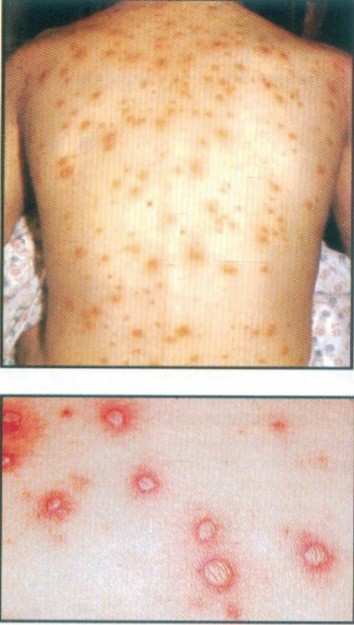
🔍 Key clinical features:
- ✓ Vesicular rash in crops – new lesions appear in waves
- ✓ Lesions in various stages – vesicles, pustules, crusts (polymorphous)
- ✓ Centripetal distribution – starts on trunk, spreads to face and extremities
- ✓ Intense pruritus – hallmark symptom
- ✓ Fever and malaise – prodromal symptoms
📋 Clinical scenario (examiner prompt)
A 6‑year‑old child is brought to the clinic with a fever and a itchy rash that started 2 days ago. The rash began on the trunk and has spread to the face and extremities. On examination, the lesions are vesicular with some becoming pustular and others crusting. The child appears mildly unwell but is afebrile at the time of examination. The mother reports that the child has been scratching the lesions. The child is immunocompetent and has not received the varicella vaccine.
🧑⚕️ Examiner tasks · TOACS
1. Identify the diagnosis from the clinical image and context.
2. Describe the clinical features (vesicular rash in crops, lesions in various stages, centripetal distribution).
3. Explain the etiology and transmission (varicella-zoster virus, respiratory droplets, incubation 14-16 days).
4. Discuss management and complications (supportive care, acyclovir for high-risk, complications, vaccination).
🎯 Expected answers (for examiners)
- • Diagnosis: Varicella (chickenpox) – primary VZV infection
- • Clinical features: Vesicular rash in crops (lesions in various stages – vesicles, pustules, crusts), centripetal distribution (trunk → face → extremities), intense pruritus, fever, malaise
- • Etiology: Varicella-zoster virus (human herpesvirus 3), transmitted by respiratory droplets and direct contact with lesions
- • Incubation period: 14-16 days (range 10-21 days)
- • Contagious period: 1-2 days before rash until all lesions are crusted (5-7 days)
- • Treatment – Healthy child: Supportive care (antihistamines for itch, acetaminophen for fever; avoid aspirin – Reye syndrome)
- • Treatment – High-risk (adolescents, adults, immunocompromised, chronic lung disease, eczema): Oral acyclovir (20 mg/kg/dose QID ×5 days) or valacyclovir
- • Complications: Secondary bacterial infection (Group A Strep, S. aureus) – most common; pneumonia, encephalitis, cerebellar ataxia, hepatitis, thrombocytopenia, Reye syndrome (aspirin-associated)
- • Prevention: Varicella vaccine (2 doses: 12-15 months, 4-6 years); VZIG for post-exposure prophylaxis in high-risk
• Classic appearance: 'Dewdrop on a rose petal' (vesicle on erythematous base)
• Crops: New lesions appear over 3-5 days
• Centripetal: More lesions on trunk than extremities
• Polymorphous: Simultaneous presence of vesicles, pustules, crusts
• Contagious period: 1-2 days before rash until all crusted
• Complications: Secondary bacterial infection most common
• Prevention: Varicella vaccine (effective, reduces severity)
⚡ Quick FCPS‑style MCQ
A 6-year-old with fever and a pruritic vesicular rash in crops, lesions in various stages (vesicles, pustules, crusts), and centripetal distribution. The most likely diagnosis and first-line treatment are:
A. Impetigo – topical antibiotics B. Varicella (chickenpox) – supportive care C. Herpes zoster – acyclovir D. Molluscum contagiosum – curettage📌 Topic summary · Vesicular Rash in Varicella
Varicella-zoster virus (VZV)
Vesicles in crops, centripetal
1-2 days before rash until crusted
Supportive (healthy); acyclovir (high-risk)
Secondary bacterial infection (most common)
Varicella vaccine (2 doses)
| Feature | Varicella (Chickenpox) |
|---|---|
| Etiology | Varicella-zoster virus (human herpesvirus 3) |
| Incubation | 14-16 days (range 10-21) |
| Rash characteristics | Pruritic vesicular rash in crops; lesions in various stages (vesicles, pustules, crusts); centripetal distribution |
| Contagious period | 1-2 days before rash until all lesions crusted (5-7 days) |
| Treatment (healthy) | Supportive care (antihistamines, acetaminophen; avoid aspirin) |
| Treatment (high-risk) | Oral acyclovir 20 mg/kg/dose QID ×5 days; IV for severe |
| Complications | Secondary bacterial infection (most common), pneumonia, encephalitis, cerebellar ataxia, hepatitis, thrombocytopenia, Reye syndrome |
| Prevention | Varicella vaccine (2 doses: 12-15 months, 4-6 years) |