FCPS Paediatrics TOACS · Interactive Station
🩺 Kangaroo Mother Care (KMC) — Skin-to-skin contact, thermoregulation, breastfeeding, LBW infants, evidence-based practice
📚 Paeds Online – paeds.online
⚕️ OBSERVED STATION · CPSP FORMAT · 8 MINUTES · SEPARATE TABS · CLINICAL PHOTO INCLUDED
📖 Problem-oriented Clinical Scenario + Photograph
👶🏻 Clinical Scenario (read aloud – 2 min):
A 1500 gm (very low birth weight) preterm infant is now 10 days old and has been in the neonatal unit since birth. He is clinically stable: breathing spontaneously in room air, feeding well (on a combination of breast milk via spoon/paladai and occasional nasogastric feeds), and has normal temperature in the incubator. However, the mother is very anxious and wants to take the baby home as soon as possible. She is also struggling with establishing breastfeeding and bonding. The neonatal team decides to initiate Kangaroo Mother Care (KMC) as a step toward discharge. The nurse demonstrates the procedure to the mother. A photograph of the KMC position is shown below.
A clinical photograph of KMC is shown below.
Task: Describe the Kangaroo Mother Care position, list the components of KMC, discuss its physiological benefits (temperature, breastfeeding, bonding), state the indications and contraindications, and outline the steps for safe implementation in a low-birth-weight infant.
A 1500 gm (very low birth weight) preterm infant is now 10 days old and has been in the neonatal unit since birth. He is clinically stable: breathing spontaneously in room air, feeding well (on a combination of breast milk via spoon/paladai and occasional nasogastric feeds), and has normal temperature in the incubator. However, the mother is very anxious and wants to take the baby home as soon as possible. She is also struggling with establishing breastfeeding and bonding. The neonatal team decides to initiate Kangaroo Mother Care (KMC) as a step toward discharge. The nurse demonstrates the procedure to the mother. A photograph of the KMC position is shown below.
A clinical photograph of KMC is shown below.
Task: Describe the Kangaroo Mother Care position, list the components of KMC, discuss its physiological benefits (temperature, breastfeeding, bonding), state the indications and contraindications, and outline the steps for safe implementation in a low-birth-weight infant.
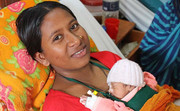
🔍 Figure: Kangaroo Mother Care (KMC) – the infant (wearing only a diaper and a cap) is placed in an upright, prone position on the mother’s bare chest, between the breasts. The baby is covered with a cloth and secured with a wrap or sling to maintain skin-to-skin contact. This position promotes thermoregulation, breastfeeding, bonding, and reduces neonatal mortality.
💡 Examiner instruction (interactive): The candidate will be asked to identify the KMC position, describe the three components (skin-to-skin contact, exclusive breastfeeding, early discharge with follow-up), discuss the physiological and psychological benefits, list indications (stable LBW infants) and contraindications (unstable infants, maternal illness), explain the KMC technique, and review evidence for reduced mortality and infection.
🔍 Examiner Questions (interactive) – Click to reveal model answers
❓ Q1 (Examiner): “Describe the position shown in the image. What is Kangaroo Mother Care (KMC)? What are its three core components?”
✅ Candidate's structured answer:
• Position: Infant (wearing only a diaper and a cap) is placed in an upright, prone position on the mother’s bare chest, between the breasts. The baby is covered with a cloth and secured with a wrap or sling to maintain continuous skin-to-skin contact.
• Kangaroo Mother Care (KMC) definition: A method of caring for low-birth-weight (LBW) and preterm infants involving prolonged, continuous skin-to-skin contact between the mother and infant.
• Three core components of KMC:
1️⃣ Early, continuous, and prolonged skin-to-skin contact (Kangaroo position).
2️⃣ Exclusive breastfeeding (or feeding with expressed breast milk).
3️⃣ Early discharge from hospital with close follow-up (Kangaroo follow-up).
• Position: Infant (wearing only a diaper and a cap) is placed in an upright, prone position on the mother’s bare chest, between the breasts. The baby is covered with a cloth and secured with a wrap or sling to maintain continuous skin-to-skin contact.
• Kangaroo Mother Care (KMC) definition: A method of caring for low-birth-weight (LBW) and preterm infants involving prolonged, continuous skin-to-skin contact between the mother and infant.
• Three core components of KMC:
1️⃣ Early, continuous, and prolonged skin-to-skin contact (Kangaroo position).
2️⃣ Exclusive breastfeeding (or feeding with expressed breast milk).
3️⃣ Early discharge from hospital with close follow-up (Kangaroo follow-up).
❓ Q2 (Examiner): “Which infants are eligible for Kangaroo Mother Care? When should it be initiated?”
✅ Candidate's answer:
• Primary target: Stable low-birth-weight (LBW) infants (birth weight <2500 g) and preterm infants (especially <2000 g).
• Eligibility criteria (must be stable):
- Able to breathe spontaneously without respiratory support.
- No major congenital anomalies or acute illness.
- No intravenous lines or need for intensive monitoring.
- Clinically stable temperature in an open crib (or with KMC).
- Mother willing and able to provide KMC.
• Initiation: As soon as the infant is clinically stable, often from the first day of life (even as early as 28 weeks gestation). KMC can be started in the NICU or after transfer to a step-down unit.
• Contraindications: Unstable infant (apnea, bradycardia, requiring mechanical ventilation), maternal acute illness (sepsis, severe postpartum hemorrhage), maternal HIV (with active lesions/untreated – but often still possible with precautions), or maternal drug use that impairs consciousness.
• Primary target: Stable low-birth-weight (LBW) infants (birth weight <2500 g) and preterm infants (especially <2000 g).
• Eligibility criteria (must be stable):
- Able to breathe spontaneously without respiratory support.
- No major congenital anomalies or acute illness.
- No intravenous lines or need for intensive monitoring.
- Clinically stable temperature in an open crib (or with KMC).
- Mother willing and able to provide KMC.
• Initiation: As soon as the infant is clinically stable, often from the first day of life (even as early as 28 weeks gestation). KMC can be started in the NICU or after transfer to a step-down unit.
• Contraindications: Unstable infant (apnea, bradycardia, requiring mechanical ventilation), maternal acute illness (sepsis, severe postpartum hemorrhage), maternal HIV (with active lesions/untreated – but often still possible with precautions), or maternal drug use that impairs consciousness.
❓ Q3 (Examiner): “How does KMC help with thermoregulation in a preterm infant? Why is it superior to an incubator in stable infants?”
✅ Candidate's answer:
• Mechanism: The mother’s chest provides a natural, servo-controlled thermal environment (maternal skin temperature adjusts to infant’s needs). The infant maintains temperature through conduction from the mother’s warm skin and conservation by the covering cloth.
• Benefits over incubator:
- Reduces hypothermia and temperature instability.
- Eliminates the need for a costly incubator and electricity.
- Promotes maternal-infant bonding.
- Allows the mother to be involved in care.
- Reduces hospital stay.
• KMC maintains infant’s axillary temperature between 36.5-37.5°C effectively, with fewer temperature fluctuations than incubator care (when mother is well).
• Mechanism: The mother’s chest provides a natural, servo-controlled thermal environment (maternal skin temperature adjusts to infant’s needs). The infant maintains temperature through conduction from the mother’s warm skin and conservation by the covering cloth.
• Benefits over incubator:
- Reduces hypothermia and temperature instability.
- Eliminates the need for a costly incubator and electricity.
- Promotes maternal-infant bonding.
- Allows the mother to be involved in care.
- Reduces hospital stay.
• KMC maintains infant’s axillary temperature between 36.5-37.5°C effectively, with fewer temperature fluctuations than incubator care (when mother is well).
❓ Q4 (Examiner): “What are the nutritional benefits of KMC? How does it improve breastfeeding rates?”
✅ Candidate's answer:
• KMC promotes early, frequent, and exclusive breastfeeding by:
- Increased maternal prolactin and oxytocin due to skin-to-skin contact → enhanced milk production and let-down.
- Easier access for the infant to breastfeed on demand.
- Reduced maternal stress, increased confidence.
- Better latch and suck-swallow coordination.
• Benefits to infant:
- Higher rates of exclusive breastfeeding.
- Improved weight gain (better growth).
- Reduced risk of necrotizing enterocolitis (NEC) due to increased breast milk.
- Shorter time to achieve full enteral feeds.
• Additional support: Expressed breast milk via cup/paladai if direct breastfeeding not yet possible.
• KMC promotes early, frequent, and exclusive breastfeeding by:
- Increased maternal prolactin and oxytocin due to skin-to-skin contact → enhanced milk production and let-down.
- Easier access for the infant to breastfeed on demand.
- Reduced maternal stress, increased confidence.
- Better latch and suck-swallow coordination.
• Benefits to infant:
- Higher rates of exclusive breastfeeding.
- Improved weight gain (better growth).
- Reduced risk of necrotizing enterocolitis (NEC) due to increased breast milk.
- Shorter time to achieve full enteral feeds.
• Additional support: Expressed breast milk via cup/paladai if direct breastfeeding not yet possible.
❓ Q5 (Examiner): “What are the maternal and infant psychological benefits of Kangaroo Mother Care?”
✅ Candidate's answer:
• Infant benefits: Reduced stress (lower cortisol), more stable sleep-wake cycles, decreased crying, improved neurodevelopmental outcomes (better cognitive and motor scores at 12 months).
• Maternal benefits: Reduced postpartum depression and anxiety, increased maternal confidence, enhanced attachment and bonding, reduced feelings of helplessness, more positive perception of her infant.
• KMC empowers mothers to be active caregivers rather than passive observers.
• Long-term effects: improved mother-child interaction, secure attachment.
• Infant benefits: Reduced stress (lower cortisol), more stable sleep-wake cycles, decreased crying, improved neurodevelopmental outcomes (better cognitive and motor scores at 12 months).
• Maternal benefits: Reduced postpartum depression and anxiety, increased maternal confidence, enhanced attachment and bonding, reduced feelings of helplessness, more positive perception of her infant.
• KMC empowers mothers to be active caregivers rather than passive observers.
• Long-term effects: improved mother-child interaction, secure attachment.
❓ Q6 (Examiner): “What evidence supports KMC reducing neonatal mortality and morbidity?”
✅ Candidate's answer:
• Meta-analyses (Cochrane) show:
- Reduced neonatal mortality by ~40% (for LBW infants when initiated early and continued).
- Reduced risk of hypothermia, severe illness, and infection (sepsis).
- Decreased nosocomial infections and shorter hospital stay.
- Improved weight gain and growth.
- Reduced risk of severe neonatal morbidity.
- No increase in adverse events.
• WHO recommends KMC as standard care for stable LBW infants.
• Particularly impactful in low-resource settings where incubators are unavailable, but also beneficial in high-resource NICUs as a family-centered care intervention.
• Meta-analyses (Cochrane) show:
- Reduced neonatal mortality by ~40% (for LBW infants when initiated early and continued).
- Reduced risk of hypothermia, severe illness, and infection (sepsis).
- Decreased nosocomial infections and shorter hospital stay.
- Improved weight gain and growth.
- Reduced risk of severe neonatal morbidity.
- No increase in adverse events.
• WHO recommends KMC as standard care for stable LBW infants.
• Particularly impactful in low-resource settings where incubators are unavailable, but also beneficial in high-resource NICUs as a family-centered care intervention.
❓ Q7 (Examiner): “Describe the step-by-step procedure for initiating KMC in a neonatal unit.”
✅ Candidate's structured answer:
1️⃣ Assess eligibility: Infant stable, mother willing and healthy.
2️⃣ Prepare the mother: Sit in a semi-reclined position, bare chest (remove bra), cover with a gown or cloth.
3️⃣ Dress the infant: Diaper only (and a cap to reduce heat loss).
4️⃣ Position the infant: Place the infant upright, prone, between the mother’s breasts, with the head turned to one side (neck extended to maintain open airway). The baby’s abdomen should contact the mother’s skin.
5️⃣ Cover and secure: Cover the infant’s back with a cloth or blanket; use a wrap, sling, or traditional cloth (kanga) to secure the infant in position, leaving the face visible.
6️⃣ Monitor during KMC: Check infant’s color, breathing, temperature (axillary), and position; watch for signs of respiratory distress.
7️⃣ Feeding: Offer breast on demand; express breast milk if needed.
8️⃣ Duration: Aim for as long as possible (ideally 24 hours/day) – continuous KMC is better than intermittent.
9️⃣ Document: Record duration, feeds, temperature, and any events.
1️⃣ Assess eligibility: Infant stable, mother willing and healthy.
2️⃣ Prepare the mother: Sit in a semi-reclined position, bare chest (remove bra), cover with a gown or cloth.
3️⃣ Dress the infant: Diaper only (and a cap to reduce heat loss).
4️⃣ Position the infant: Place the infant upright, prone, between the mother’s breasts, with the head turned to one side (neck extended to maintain open airway). The baby’s abdomen should contact the mother’s skin.
5️⃣ Cover and secure: Cover the infant’s back with a cloth or blanket; use a wrap, sling, or traditional cloth (kanga) to secure the infant in position, leaving the face visible.
6️⃣ Monitor during KMC: Check infant’s color, breathing, temperature (axillary), and position; watch for signs of respiratory distress.
7️⃣ Feeding: Offer breast on demand; express breast milk if needed.
8️⃣ Duration: Aim for as long as possible (ideally 24 hours/day) – continuous KMC is better than intermittent.
9️⃣ Document: Record duration, feeds, temperature, and any events.
❓ Q8 (Examiner): “What monitoring is required during KMC? What complications should you watch for?”
✅ Candidate's answer:
• Monitor every 15-30 minutes initially:
- Infant’s color (pink, not cyanotic).
- Respiratory rate and effort (no retractions, grunting).
- Position: Ensure the head is in a neutral/“sniffing” position with the chin not tucked (airway open).
- Temperature: Axillary temperature should be 36.5-37.5°C. Hypothermia or hyperthermia → adjust cover or maternal clothing.
- Heart rate (can be checked by mother feeling the chest).
- Signs of respiratory distress (apnea, tachypnea, desaturations).
• If any complication occurs (apnea, bradycardia, hypothermia, or respiratory distress), gently return the infant to an incubator or warmer for stabilization.
• KMC is NOT recommended in unmonitored settings for unstable infants.
• Monitor every 15-30 minutes initially:
- Infant’s color (pink, not cyanotic).
- Respiratory rate and effort (no retractions, grunting).
- Position: Ensure the head is in a neutral/“sniffing” position with the chin not tucked (airway open).
- Temperature: Axillary temperature should be 36.5-37.5°C. Hypothermia or hyperthermia → adjust cover or maternal clothing.
- Heart rate (can be checked by mother feeling the chest).
- Signs of respiratory distress (apnea, tachypnea, desaturations).
• If any complication occurs (apnea, bradycardia, hypothermia, or respiratory distress), gently return the infant to an incubator or warmer for stabilization.
• KMC is NOT recommended in unmonitored settings for unstable infants.
❓ Q9 (Examiner): “How long should KMC be continued each day? When can the infant be discharged from the hospital on KMC?”
✅ Candidate's answer:
• Recommended duration: As long as possible – ideally 24 hours per day (continuous KMC). Intermittent KMC is also beneficial (at least 4-6 hours/day).
• Discharge criteria on KMC:
- Clinically stable (no apnea, bradycardia, desaturations).
- Gaining weight adequately (≥15-20 g/kg/day).
- Able to maintain temperature with KMC alone (without incubator).
- Mother confident and competent in KMC technique.
- Follow-up arranged (KMC follow-up clinic) within 48-72 hours after discharge.
• KMC can be continued at home until the infant reaches ~40 weeks corrected gestational age (or 2500 g).
• Early discharge with KMC reduces hospital stay and healthcare costs without increasing mortality.
• Recommended duration: As long as possible – ideally 24 hours per day (continuous KMC). Intermittent KMC is also beneficial (at least 4-6 hours/day).
• Discharge criteria on KMC:
- Clinically stable (no apnea, bradycardia, desaturations).
- Gaining weight adequately (≥15-20 g/kg/day).
- Able to maintain temperature with KMC alone (without incubator).
- Mother confident and competent in KMC technique.
- Follow-up arranged (KMC follow-up clinic) within 48-72 hours after discharge.
• KMC can be continued at home until the infant reaches ~40 weeks corrected gestational age (or 2500 g).
• Early discharge with KMC reduces hospital stay and healthcare costs without increasing mortality.
❓ Q10 (Examiner): “What are the absolute and relative contraindications to KMC?”
✅ Candidate's answer:
• Absolute contraindications (infant):
- Severe respiratory distress (requiring mechanical ventilation or CPAP).
- Hemodynamic instability (shock, requiring inotropes).
- Active seizures.
- Major congenital anomalies requiring immediate surgery.
• Absolute contraindications (maternal):
- Acute severe illness (sepsis, eclampsia, severe postpartum hemorrhage).
- Active untreated HIV with breast lesions (risk of transmission) – but many programs allow KMC with expressed breast milk if mother on ART.
- Severe psychiatric illness or substance intoxication.
• Relative contraindications:
- Mild respiratory distress (can be trialed with careful monitoring).
- Very low birth weight (<1000 g) – can still initiate KMC in NICU with monitoring.
- Maternal chronic illness (well-controlled HIV, hepatitis B) – KMC is generally safe with precautions.
• Absolute contraindications (infant):
- Severe respiratory distress (requiring mechanical ventilation or CPAP).
- Hemodynamic instability (shock, requiring inotropes).
- Active seizures.
- Major congenital anomalies requiring immediate surgery.
• Absolute contraindications (maternal):
- Acute severe illness (sepsis, eclampsia, severe postpartum hemorrhage).
- Active untreated HIV with breast lesions (risk of transmission) – but many programs allow KMC with expressed breast milk if mother on ART.
- Severe psychiatric illness or substance intoxication.
• Relative contraindications:
- Mild respiratory distress (can be trialed with careful monitoring).
- Very low birth weight (<1000 g) – can still initiate KMC in NICU with monitoring.
- Maternal chronic illness (well-controlled HIV, hepatitis B) – KMC is generally safe with precautions.
❓ Q11 (Examiner): “Is Kangaroo Mother Care used only in low-resource settings? What is its role in high-income NICUs?”
✅ Candidate's answer:
• KMC is beneficial in ALL settings, not just low-resource.
• High-resource NICUs: KMC is increasingly adopted as part of family-centered care. It complements incubator care – even for extremely preterm infants on respiratory support (once stable). Provides benefits beyond thermoregulation: improved brain development, reduced maternal stress, earlier discharge.
• In low-resource settings, KMC is life-saving because incubators are scarce and infections are high. KMC reduces mortality, hypothermia, and sepsis.
• KMC can be initiated in the NICU, continued in a step-down unit, then transitioned to home with follow-up.
• WHO encourages KMC as the standard of care for stable LBW infants globally.
• KMC is beneficial in ALL settings, not just low-resource.
• High-resource NICUs: KMC is increasingly adopted as part of family-centered care. It complements incubator care – even for extremely preterm infants on respiratory support (once stable). Provides benefits beyond thermoregulation: improved brain development, reduced maternal stress, earlier discharge.
• In low-resource settings, KMC is life-saving because incubators are scarce and infections are high. KMC reduces mortality, hypothermia, and sepsis.
• KMC can be initiated in the NICU, continued in a step-down unit, then transitioned to home with follow-up.
• WHO encourages KMC as the standard of care for stable LBW infants globally.
❓ Q12 (Examiner): “How will you counsel a mother who is hesitant to start KMC because she is afraid of harming her very small preterm baby?”
✅ Candidate's structured answer:
• “Kangaroo Mother Care is a very safe and effective method for small babies. It means holding your baby skin-to-skin on your chest, like a kangaroo carries her baby. It is not dangerous and is actually recommended by the World Health Organization for babies like yours.”
• “It helps keep your baby warm, just like an incubator, but even better because your body adjusts the temperature naturally. It also helps you produce more breast milk and helps your baby gain weight faster.”
• “We will show you exactly how to position your baby safely – with the head turned to the side and the airway open. A nurse will stay with you the first few times to check that your baby is comfortable and breathing well.”
• “Babies who receive Kangaroo Mother Care cry less, sleep better, and have lower risk of serious infections. They also go home earlier. Many mothers find it helps them feel more confident and less anxious.”
• “Would you like us to show you how to do it now? You can start with just 30 minutes and see how comfortable you and your baby feel.”
• “You are not alone – we will support you throughout.”
• “Kangaroo Mother Care is a very safe and effective method for small babies. It means holding your baby skin-to-skin on your chest, like a kangaroo carries her baby. It is not dangerous and is actually recommended by the World Health Organization for babies like yours.”
• “It helps keep your baby warm, just like an incubator, but even better because your body adjusts the temperature naturally. It also helps you produce more breast milk and helps your baby gain weight faster.”
• “We will show you exactly how to position your baby safely – with the head turned to the side and the airway open. A nurse will stay with you the first few times to check that your baby is comfortable and breathing well.”
• “Babies who receive Kangaroo Mother Care cry less, sleep better, and have lower risk of serious infections. They also go home earlier. Many mothers find it helps them feel more confident and less anxious.”
• “Would you like us to show you how to do it now? You can start with just 30 minutes and see how comfortable you and your baby feel.”
• “You are not alone – we will support you throughout.”
🗣️ Examiner's probing / high-yield points:
• "What are the three pillars of KMC?" → Skin-to-skin contact + exclusive breastfeeding + early discharge with follow-up.
• "What is the evidence for mortality reduction?" → Cochrane: ~40% reduction in neonatal mortality in LBW infants.
• "How does KMC regulate temperature?" → Maternal chest skin acts as a natural servo-controlled warmer.
• "When can KMC start?" → As soon as infant is stable (may be day 1 of life).
• "What is the recommended daily duration?" → As long as possible (ideally 24 hours/day).
• "What are the contraindications?" → Unstable infant (respiratory distress, shock, seizures), acutely ill mother.
• "Is KMC only for low-resource settings?" → No – beneficial in all NICUs as family-centered care.
• "What are the three pillars of KMC?" → Skin-to-skin contact + exclusive breastfeeding + early discharge with follow-up.
• "What is the evidence for mortality reduction?" → Cochrane: ~40% reduction in neonatal mortality in LBW infants.
• "How does KMC regulate temperature?" → Maternal chest skin acts as a natural servo-controlled warmer.
• "When can KMC start?" → As soon as infant is stable (may be day 1 of life).
• "What is the recommended daily duration?" → As long as possible (ideally 24 hours/day).
• "What are the contraindications?" → Unstable infant (respiratory distress, shock, seizures), acutely ill mother.
• "Is KMC only for low-resource settings?" → No – beneficial in all NICUs as family-centered care.
📘 Kangaroo Mother Care (KMC) – Core Revision for TOACS
🔍 Definition
Method of caring for low-birth-weight/preterm infants involving prolonged skin-to-skin contact, exclusive breastfeeding, and early discharge with follow-up.
Method of caring for low-birth-weight/preterm infants involving prolonged skin-to-skin contact, exclusive breastfeeding, and early discharge with follow-up.
📊 Three Components
1. Kangaroo position (skin-to-skin). 2. Exclusive breastfeeding. 3. Early discharge and kangaroo follow-up.
1. Kangaroo position (skin-to-skin). 2. Exclusive breastfeeding. 3. Early discharge and kangaroo follow-up.
🩺 Indications
Stable low-birth-weight (<2500 g) and preterm infants. Can be started from first day of life in NICU and continued at home.
Stable low-birth-weight (<2500 g) and preterm infants. Can be started from first day of life in NICU and continued at home.
⚕️ Contraindications
Unstable infant (respiratory distress, shock, apnea, seizures). Maternal acute severe illness or untreated HIV with breast lesions.
Unstable infant (respiratory distress, shock, apnea, seizures). Maternal acute severe illness or untreated HIV with breast lesions.
📈 Benefits
Reduces neonatal mortality (40%), hypothermia, sepsis, infection, hospital stay. Improves breastfeeding, bonding, weight gain, neurodevelopment.
Reduces neonatal mortality (40%), hypothermia, sepsis, infection, hospital stay. Improves breastfeeding, bonding, weight gain, neurodevelopment.
📋 Implementation
Infant in diaper + cap, upright prone on mother’s bare chest, covered and secured. Monitor temperature, breathing, position. Aim for 24 hours/day.
Infant in diaper + cap, upright prone on mother’s bare chest, covered and secured. Monitor temperature, breathing, position. Aim for 24 hours/day.
⭐ High-yield pearls for TOACS (Kangaroo Mother Care):
• Three pillars: Skin-to-skin + exclusive breastfeeding + early follow-up.
• Mortality reduction: ~40% (Cochrane evidence).
• Thermoregulation: Maternal chest adjusts to infant temperature.
• Ideal candidate: Stable LBW/preterm infant (any setting).
• Duration: As long as possible daily (ideally 24h).
• Contraindications: Unstable infant (respiratory distress, shock, apnea, seizures).
• Discharge with KMC: After weight gain, temperature stability, maternal competency, and follow-up arranged.
• Global standard: WHO recommends KMC for all stable LBW infants.
• Three pillars: Skin-to-skin + exclusive breastfeeding + early follow-up.
• Mortality reduction: ~40% (Cochrane evidence).
• Thermoregulation: Maternal chest adjusts to infant temperature.
• Ideal candidate: Stable LBW/preterm infant (any setting).
• Duration: As long as possible daily (ideally 24h).
• Contraindications: Unstable infant (respiratory distress, shock, apnea, seizures).
• Discharge with KMC: After weight gain, temperature stability, maternal competency, and follow-up arranged.
• Global standard: WHO recommends KMC for all stable LBW infants.
🗣️ Candidate's role-play & examiner feedback
💬 To the candidate (role‑play): You will be asked the 12 questions from the Examiner Q&A tab (including components, indications, benefits, implementation, monitoring, contraindications, and counseling). Provide concise, evidence‑based answers. Examiner may ask about the mortality reduction evidence or the positioning details. Use structured points and demonstrate empathetic communication when counseling a hesitant mother.
📝 Examiner Marking Grid (KMC – TOACS station):
- ✅ Correctly identifies KMC position (skin-to-skin, upright prone on mother’s chest)
- ✅ Lists three components (skin-to-skin, exclusive breastfeeding, early discharge with follow-up)
- ✅ States eligibility (stable LBW/preterm infant, no respiratory distress, mother willing)
- ✅ Describes physiological benefits (thermoregulation, weight gain, breastfeeding)
- ✅ Explains mortality reduction (~40% from Cochrane meta-analysis)
- ✅ Lists psychological benefits (bonding, reduced maternal depression)
- ✅ Outlines step-by-step implementation (positioning, covering, securing, monitoring)
- ✅ States contraindications (unstable infant, maternal acute illness)
- ✅ Discusses recommended duration (as long as possible, ideally 24h/day)
- ✅ Provides appropriate parental counseling (reassurance, safety, benefits, demonstration)
📚 Key references: Nelson Textbook of Pediatrics 22e (Chapter 119.2 – Extremely and Very Preterm Infants), WHO Kangaroo Mother Care guidelines, Cochrane reviews, CPSP guidelines on newborn care.